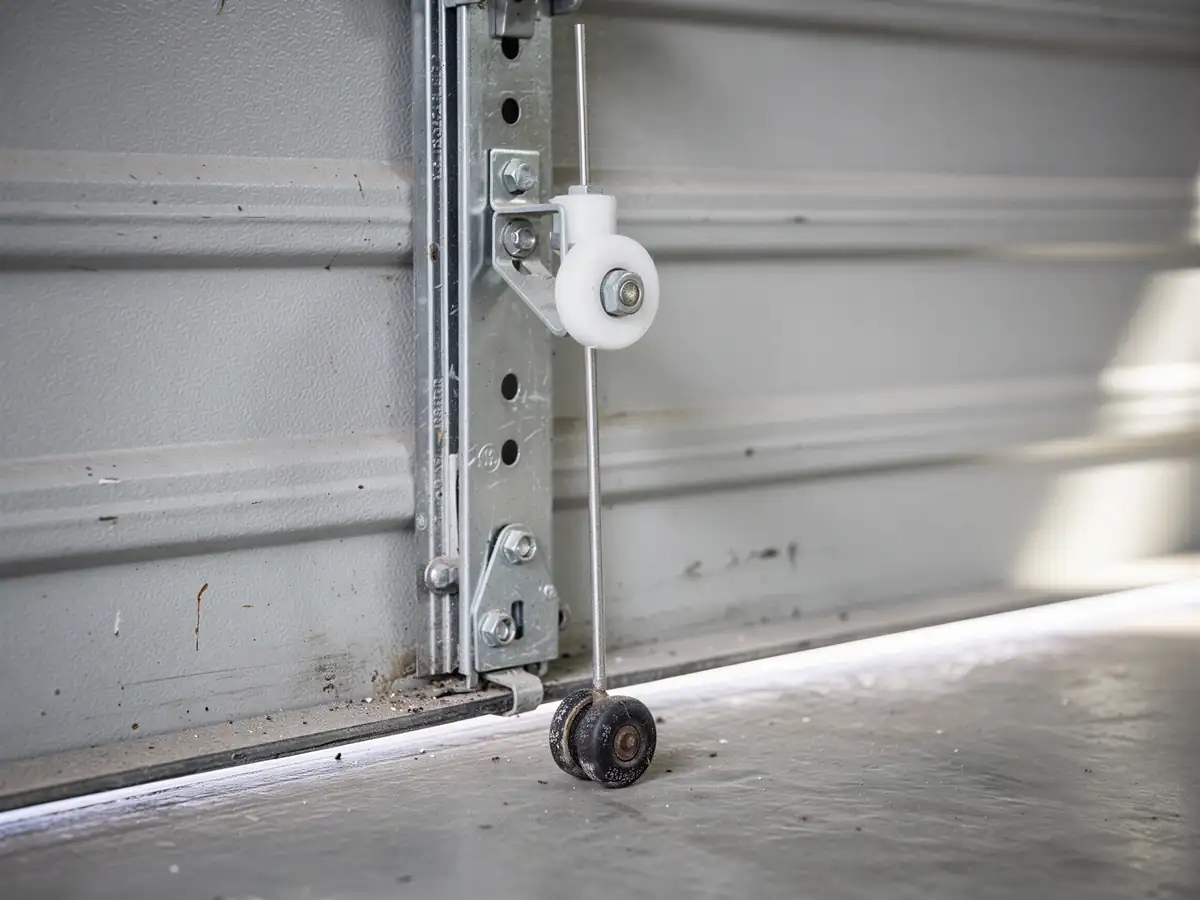
Norfolk homes built mostly between 1966 and 1977 carry original torsion springs that fail fast once cold fronts hit. Here's what breaks, when, and why.
Norfolk sits in a moderate-cold band, not the deep freeze you'd get further inland, but cold enough that steel contracts and loses flex every winter. That matters here because so much of the housing stock predates modern spring coatings. Most of the houses on this side of Norfolk, went up between 1966 and 1977, and a lot of the torsion springs on those doors are original or close to it. Steel fatigues with every cycle, and cold makes a tired spring brittle instead of just stiff. A spring that creaks through October and November with no trouble can let go on the first real cold morning in January, usually with no warning beyond a bang and a door that won't budge. Out toward five and nine miles southwest, the same 1960s-70s stock shows the identical wear pattern - same era, same hardware, same failure mode. This isn't a Norfolk-specific metal problem so much as a Norfolk-specific age problem: the climate just happens to be the thing that finishes off hardware that's already fifty-some years into its service life.
What Is Going On
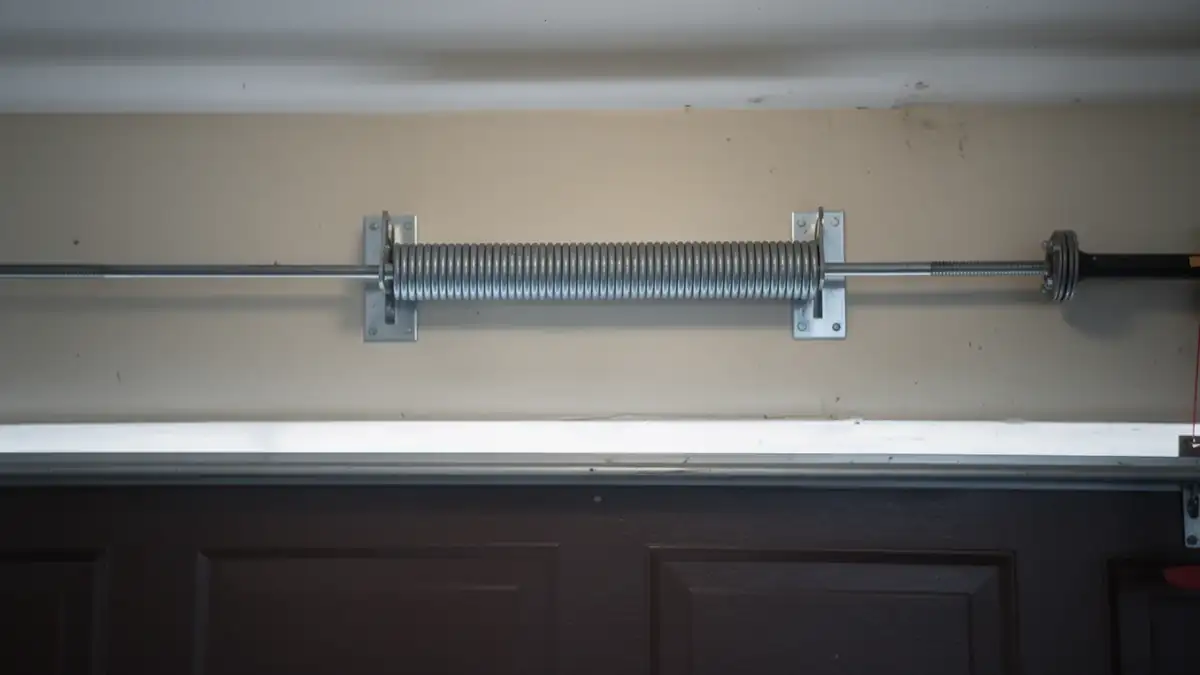
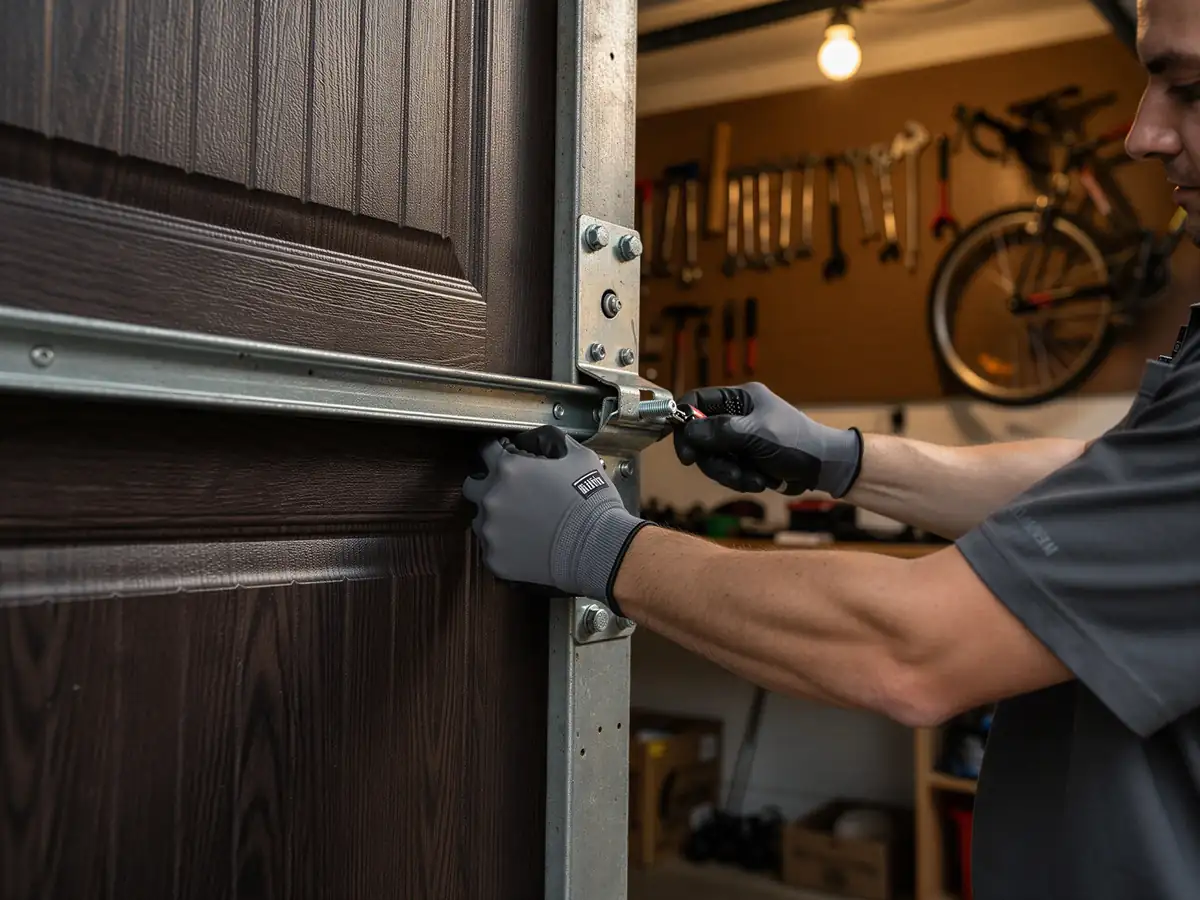
A torsion spring stores energy by twisting. Every time the door opens and closes, the coil flexes, and over decades that flexing work-hardens the metal until it's no longer springy so much as just rigid and ready to crack. Cold speeds this along because contracting steel is less forgiving of the same stress. A spring rated for a winter that doesn't dip much below freezing on paper still loses temper over fifty-some years of damp Norfolk cold snaps, especially on doors that never had the coil re-lubricated or inspected. With 18,776 owner-occupied houses across the service area, and most of that stock dating to the same post-1966 building wave, a good number of those springs are original to the house. When one side goes, the other side is usually close behind - they've logged the same cycles, the same age, the same cold. We don't recommend replacing one spring on a double door and leaving its twin; that's a callback waiting to happen, and it's not a repair we'll quote that way.
Season by Season
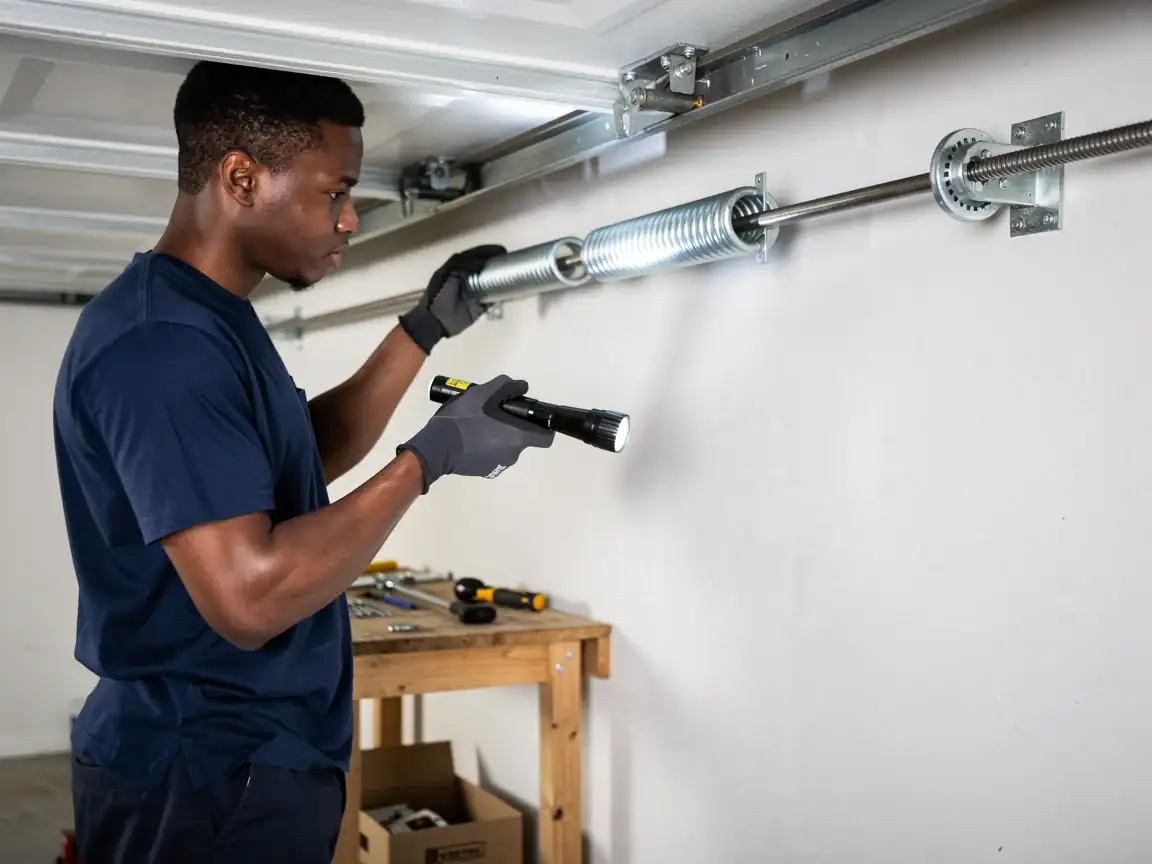
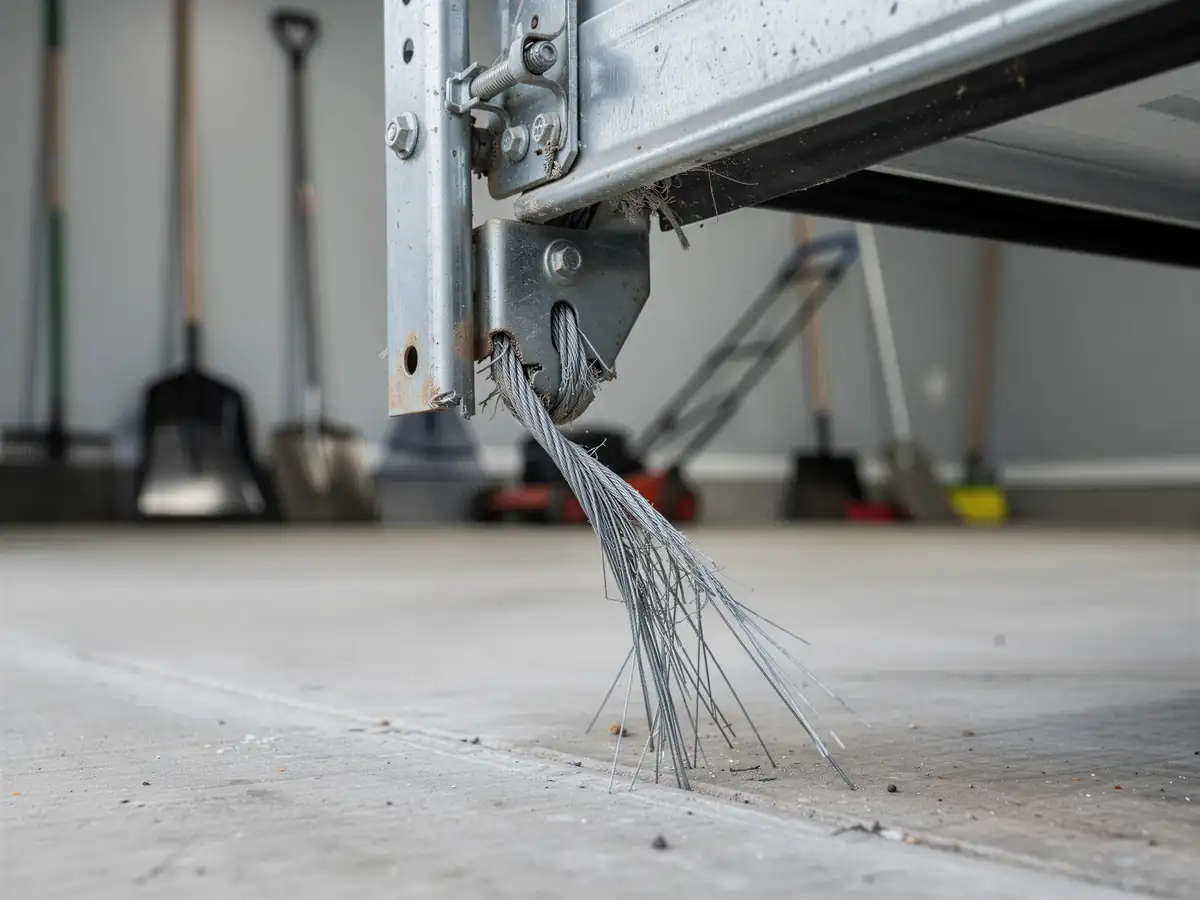
Fall is when you start hearing it before you see it - a grinding pop on the way up, a door that hesitates at the top of the track. That's the spring losing its last bit of flex before a cold morning finishes the job. Winter is when the calls come in heaviest, usually right after the first hard cold front pushes through and a spring that was barely holding on overnight. Spring and summer are quieter for spring failures specifically, though humidity brings its own track and roller issues that are a separate problem. If your door is original to a house built in that 1966-1977 wave and you haven't had the springs looked at, the coldest stretch of the year is when that gap in maintenance gets expensive. We'd rather catch it in November with an inspection than get the call in January when the door is stuck shut and the car's inside.
The Common Mistake
The mistake we see most is treating a slow, hesitant door as an opener problem. Homeowners replace the opener, the door still groans and drags, and the real issue - a spring that's lost most of its tension - never gets touched until it snaps outright. The opener motor isn't built to lift the door's full weight on its own; it's built to assist a properly tensioned spring. When the spring is tired, the opener strains, burns out early, and gets blamed for a job it was never doing. We'll be straight with you: if your door is original to a house from that 1966-77 wave, we're probably going to recommend replacing both springs together rather than patching one, and we'll say so even if it's not what you called about. Median household income here runs $89,945, and most of our winter calls end in a full two-spring replacement rather than a stopgap, because a stopgap on fifty-year-old hardware rarely buys more than a few cold mornings.
Why did my spring break on such a cold morning specifically
Cold steel is less flexible, and a spring that's already fatigued from decades of cycling has less margin left. The first hard cold front of the season is often the final stress that finishes off a spring that's been quietly weakening for years, which is why we see a spike in calls right after the temperature drops.
Should I replace one spring or both
Both, if your door has two. They're the same age, they've handled the same number of cycles, and if one failed from fatigue the other is close behind. Replacing only one is a short-term fix that usually means a second call within a year or two.
Is this just an old-house problem
Mostly, yes. Houses built in Norfolk's 1966-1977 wave often still have original torsion hardware, and that age is the bigger factor than any one cold spell. Newer doors with modern coated springs handle the same winters with far fewer failures.
Can I just lubricate the spring and skip replacement
Lubrication helps a spring run quieter and can extend life a little, but it doesn't restore lost temper in steel that's already fatigued. If the coil looks stretched, has visible gaps, or the door is noticeably harder to lift than it used to be, lubrication is buying you weeks, not years.
Ready to get your garage door sorted?
Tell us what it’s doing and where you are in Norfolk - we’ll take it from there.