
Why It Happens Here
Most of Norfolk's housing stock went up between 1966 and 1977
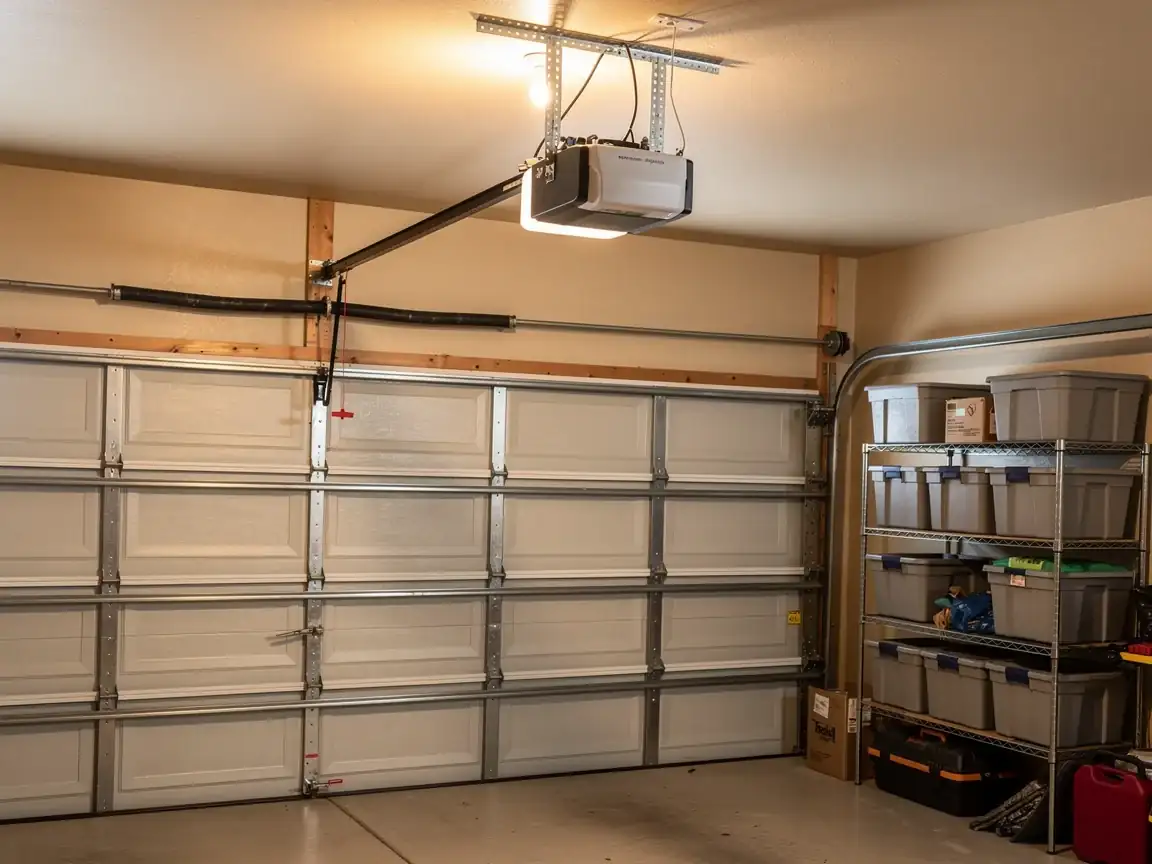
Years when builders hung steel sectional doors on torsion springs sized for the door that shipped with the house, not the heavier insulated panel a lot of owners have swapped in since. That mismatch sits quietly for decades until a cold snap tightens things up and the spring finally lets go.
Norfolk sits in a cold-moderate climate band
Which means the swings aren't brutal, but they're enough. A spring that holds fine in July coils just a hair tighter in January, and a cable that's been fraying slowly finally catches on a worn roller at the wrong moment - usually right as you're backing out for work. Across the two main pockets of 1960s-70s construction that make up most of this service area, we see the same failure pattern over and over: original hardware, decades of small stress cycles, then one cold morning it's done.
This isn't a brand problem or a bad-luck problem
It's an age-of-house problem, and in Norfolk, the house age is consistent enough that we can usually guess what's wrong before we see the door.
What You Are Seeing
The call we get most is a door that won't move at all - the opener runs but the door doesn't budge, which almost always means a torsion spring has snapped. You'll sometimes hear it before you see it: a bang from the garage, loud enough to notice from inside the house.
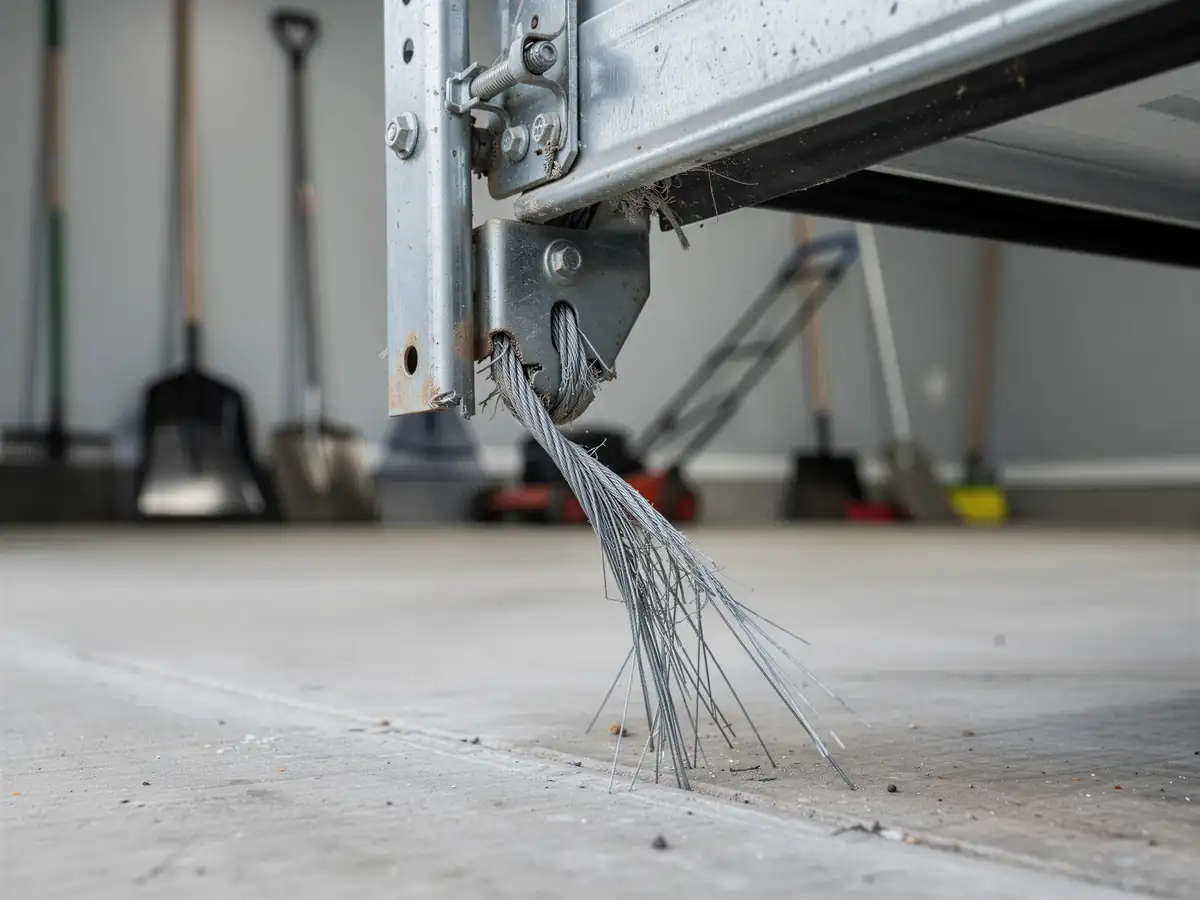
Second most common is a door that's partway open and stuck, usually because a cable has come off the drum or frayed through. Don't try to force that one by hand or with the opener - a cable under tension that lets go can do real damage.
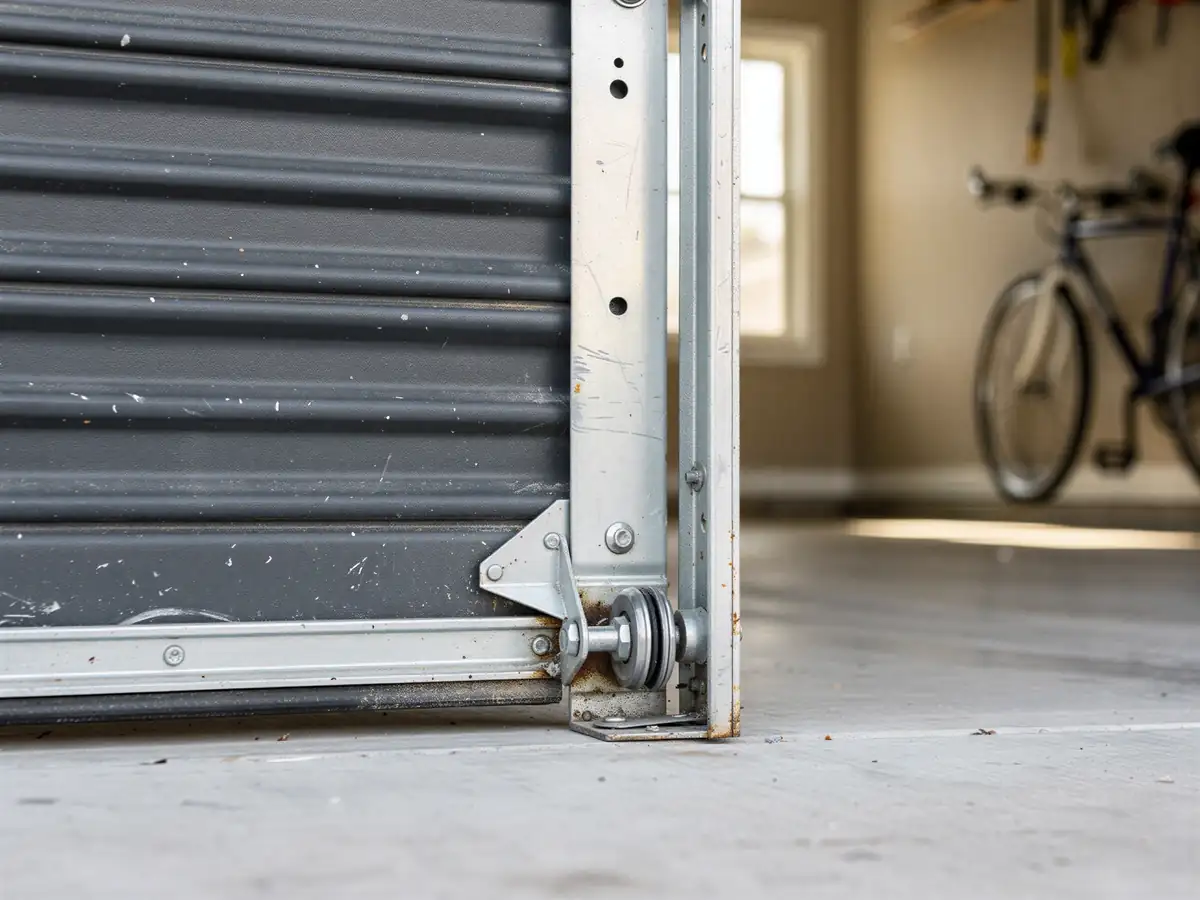
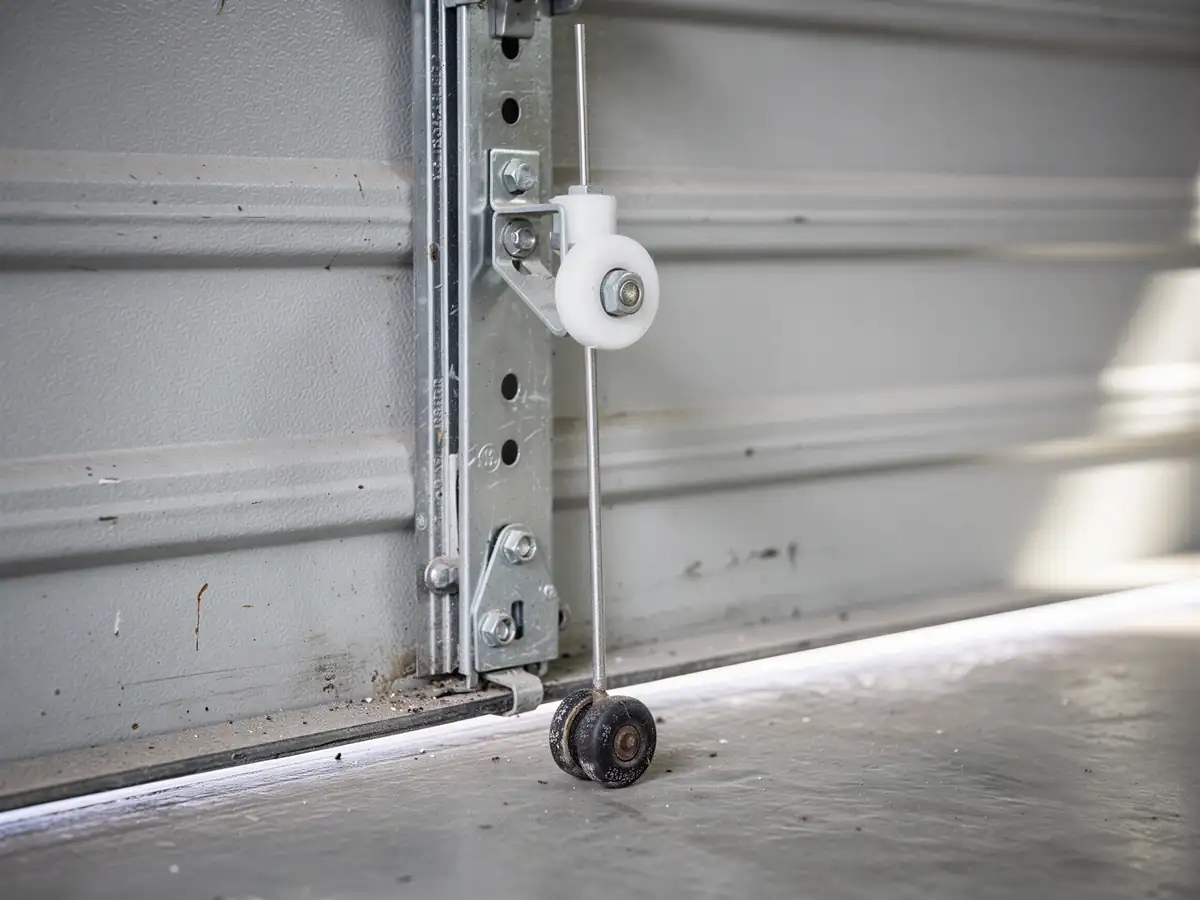
Less dramatic but just as disabling: a door that drags, grinds, or reverses itself halfway up. That's usually a roller worn out of its track or a sensor knocked out of alignment, both common on doors that have been opening and closing on the same hardware since the house was built.
If your door won't close and you can see daylight along one edge, that's a track or panel issue, not a spring issue - different fix, usually a shorter one.
How Long You Are Without the Door
We don't have a posted response-time guarantee to quote you here, so we won't make one up. What we can tell you is how the job itself breaks down once we're on site.
A snapped torsion spring is typically a same-visit fix - we carry common spring sizes because they're the single most frequent call across this service area's 1960s-70s housing stock. A cable replacement is similar: straightforward, parts on the truck, door back in service before we leave.
Where it slows down is anything involving a discontinued panel or an opener model old enough that the manufacturer's stopped making the circuit board. With roughly 44,335 households and 18,776 owner-occupied houses across the area, we run into a fair number of original 1970s door panels that simply aren't made anymore. In that case we'll tell you straight: the door opens today on a temporary fix, and the real repair waits on a part.
We'd rather say that up front than promise a timeline we can't hit.
How We Fix It
We start by finding the actual point of failure, not just the symptom
A door that won't open could be a spring, a cable, or a bent track, and treating the wrong one wastes your money and our time.
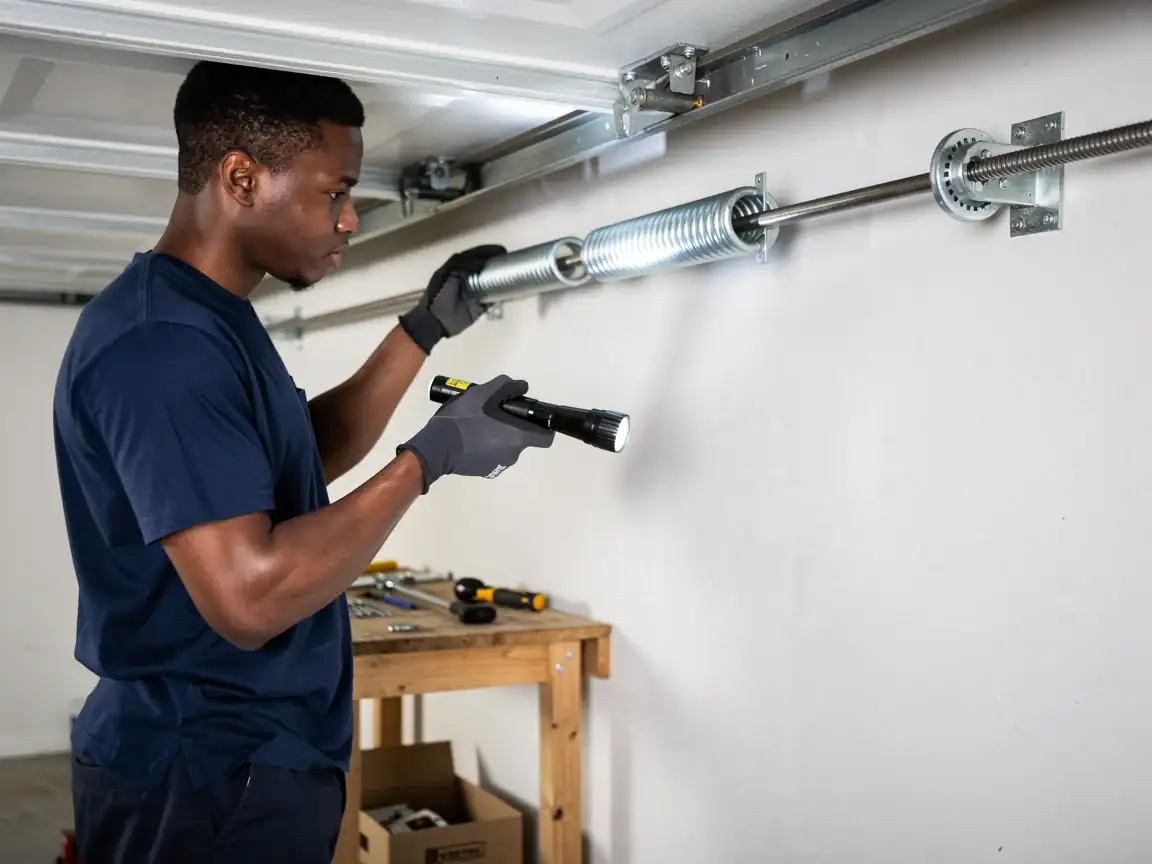
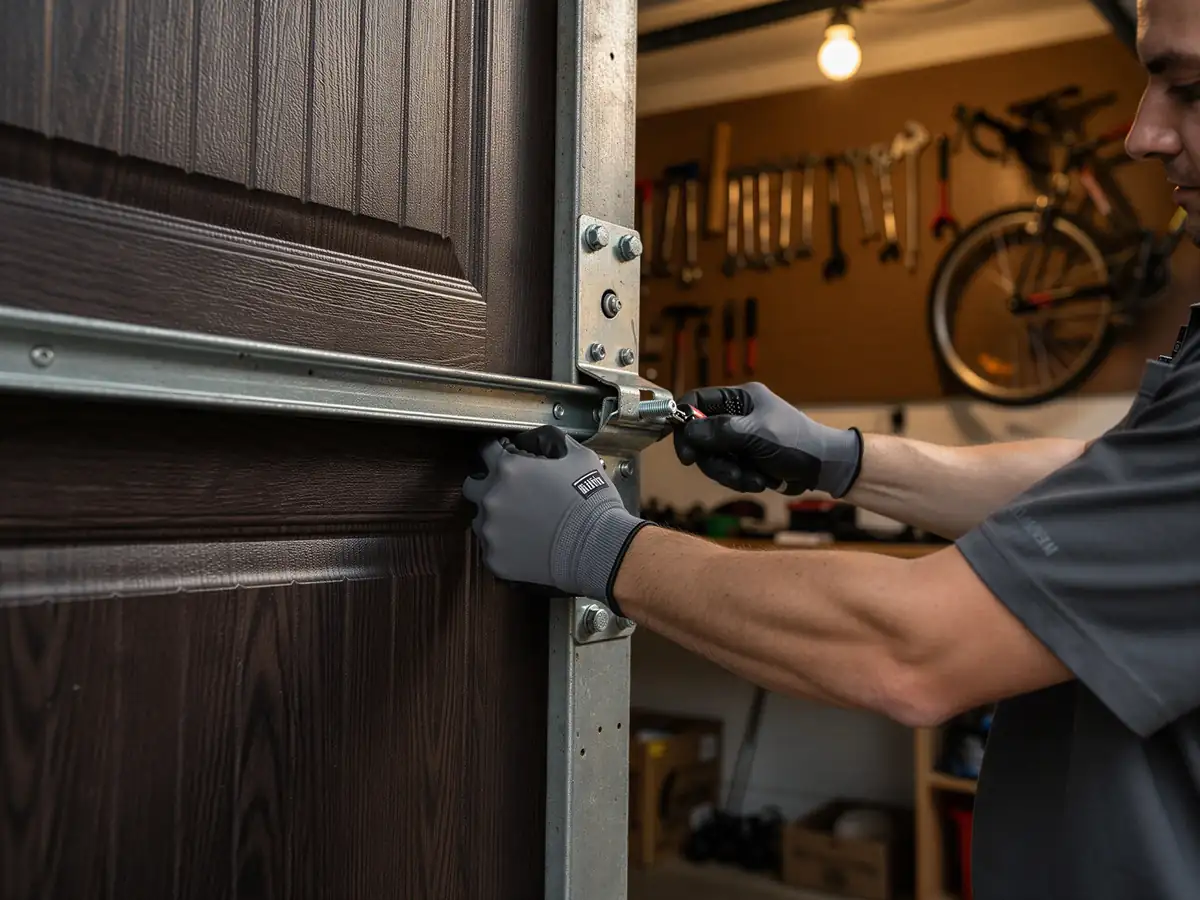
For a broken spring, we replace it under tension with the right wire gauge for the door's weight
Not just whatever matches the old one, since plenty of original-era springs were undersized for doors that got upgraded later. For a cable, we replace both sides even if only one failed, because if one cable is that old, the other is close behind it.
With a median household income of $89,945 across the service area
We find most homeowners want a straight repair-versus-replace number before they decide anything. We'll give you that honestly: if the opener's circuit board is shot and the model's discontinued, replacement is usually cheaper than chasing parts. If it's a spring or cable on a door that's otherwise sound, repair is the right call almost every time.
- $89,945 median household income
One limitation worth saying plainly
We don't stock every panel style from houses built in the 1966-1977 window, and a badly dented original panel may need to be special-ordered.