Why It Happens Here
Most of the houses we get called to went up between 1966 and 1977
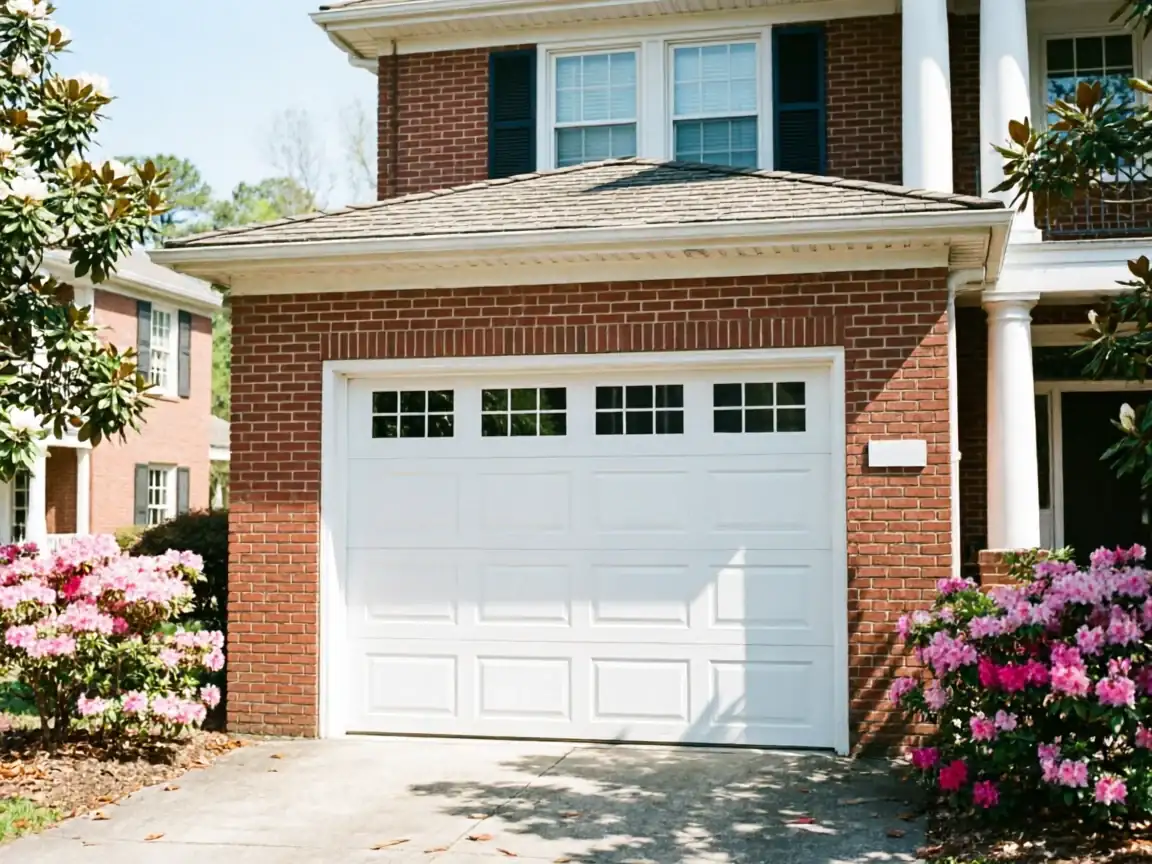
With the median build year sitting around 1971. That's the era this whole service area was built out in, across the two older sections that make up most of the housing stock here. A lot of those garages still have the torsion spring that came with the house, sized for the door weight and cycle count of a 1970s build, not anything installed since.
Norfolk sits in a cold-moderate climate band
Which doesn't sound dramatic next to places that get real ice storms, but it still means the metal in these doors goes through a freeze-thaw swing every winter. Track bolts work loose, bottom seals crack, and the grease in an original spring coil thickens up in the cold and won't let the spring move the way it should. None of that is a defect. It's just fifty-plus years of hardware doing what hardware does on a schedule nobody set out to follow.
Put those two things together
Original-era springs and tracks, plus decades of seasonal temperature swing - and you get the same failure patterns showing up house after house on these streets, not random one-offs.
What You Are Seeing
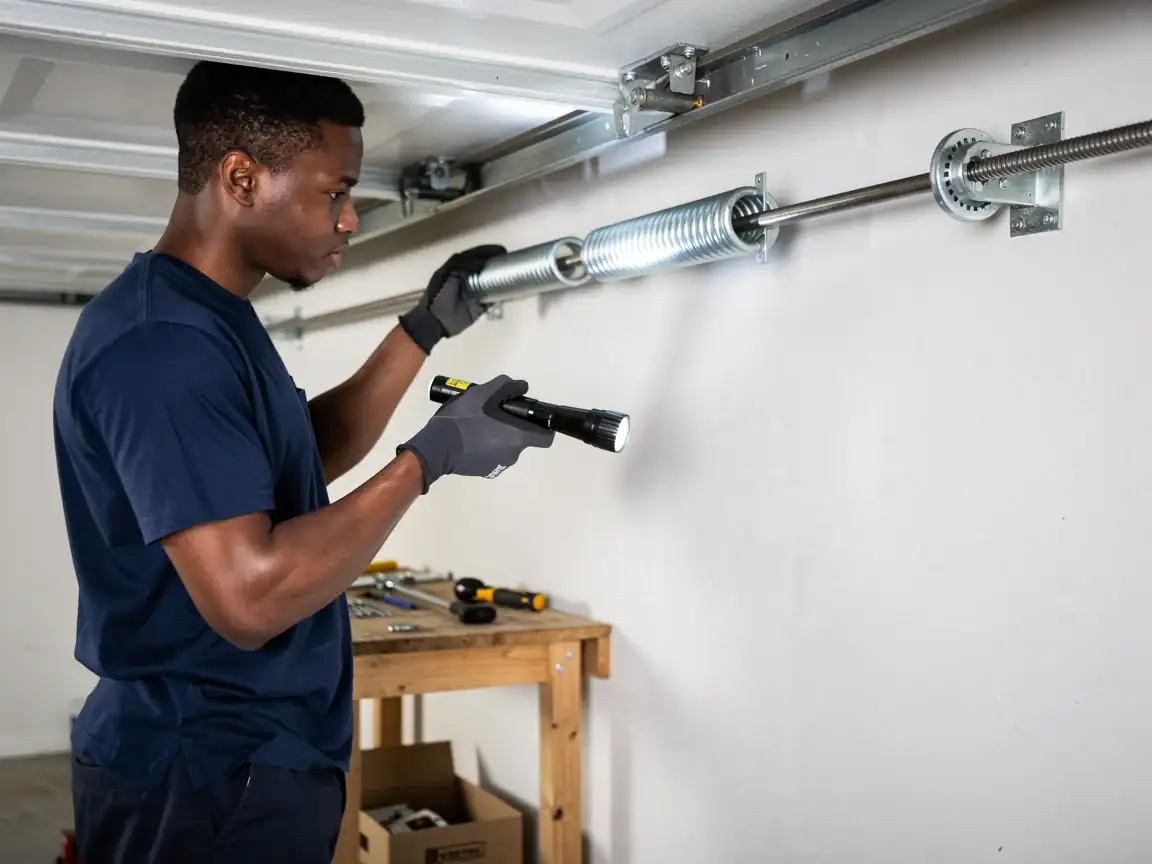
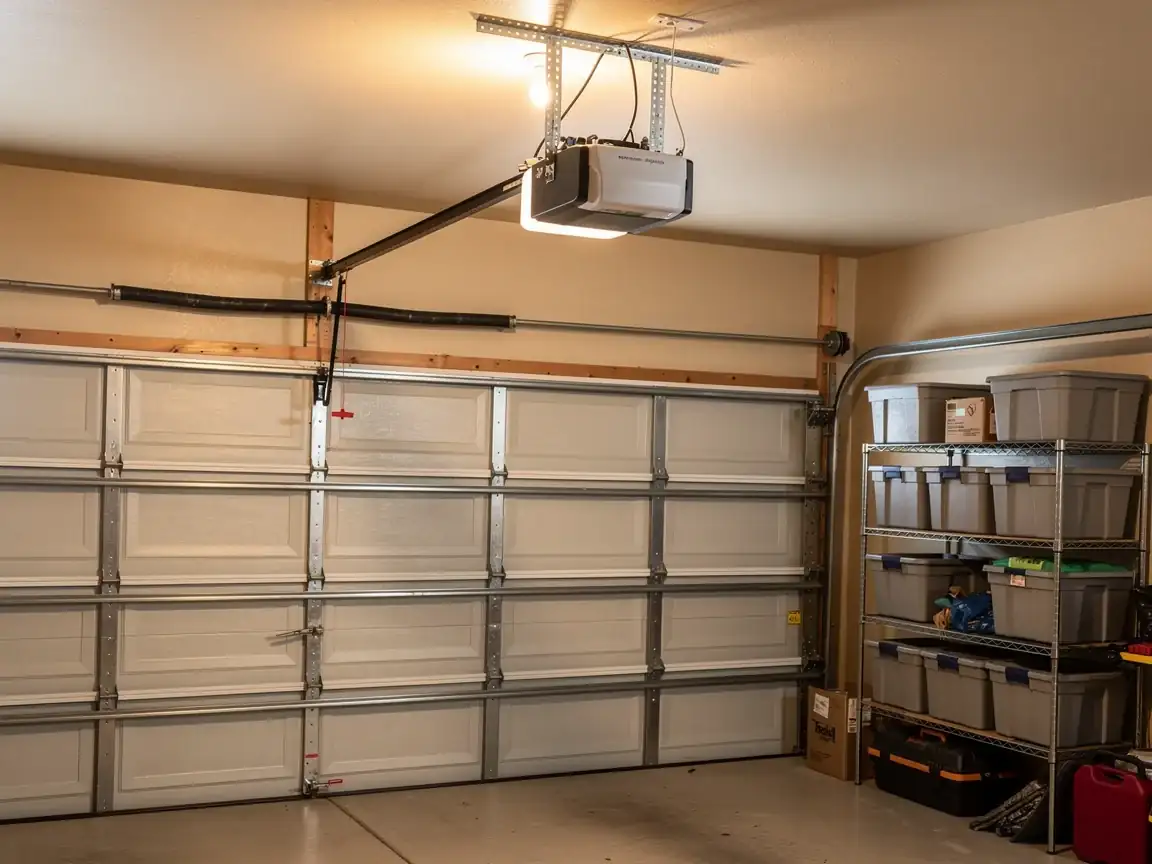
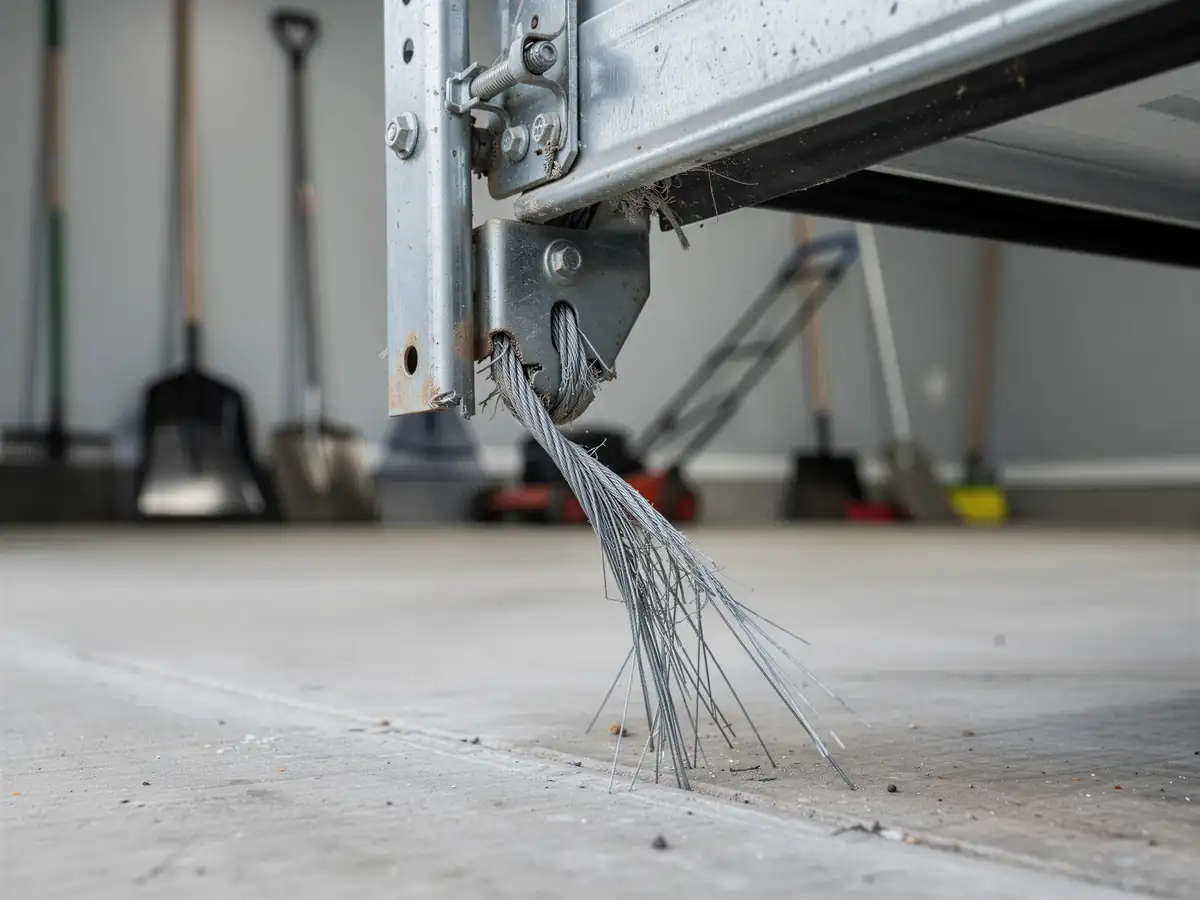
On a house from this era, the first sign is usually a loud bang from the garage followed by a door that won't lift, or lifts a few inches and stops. That's a broken torsion spring - common on doors that have had the same spring since the original install. You might also notice the door sagging to one side as it closes, which points to a cable that's come off its drum rather than the spring itself.
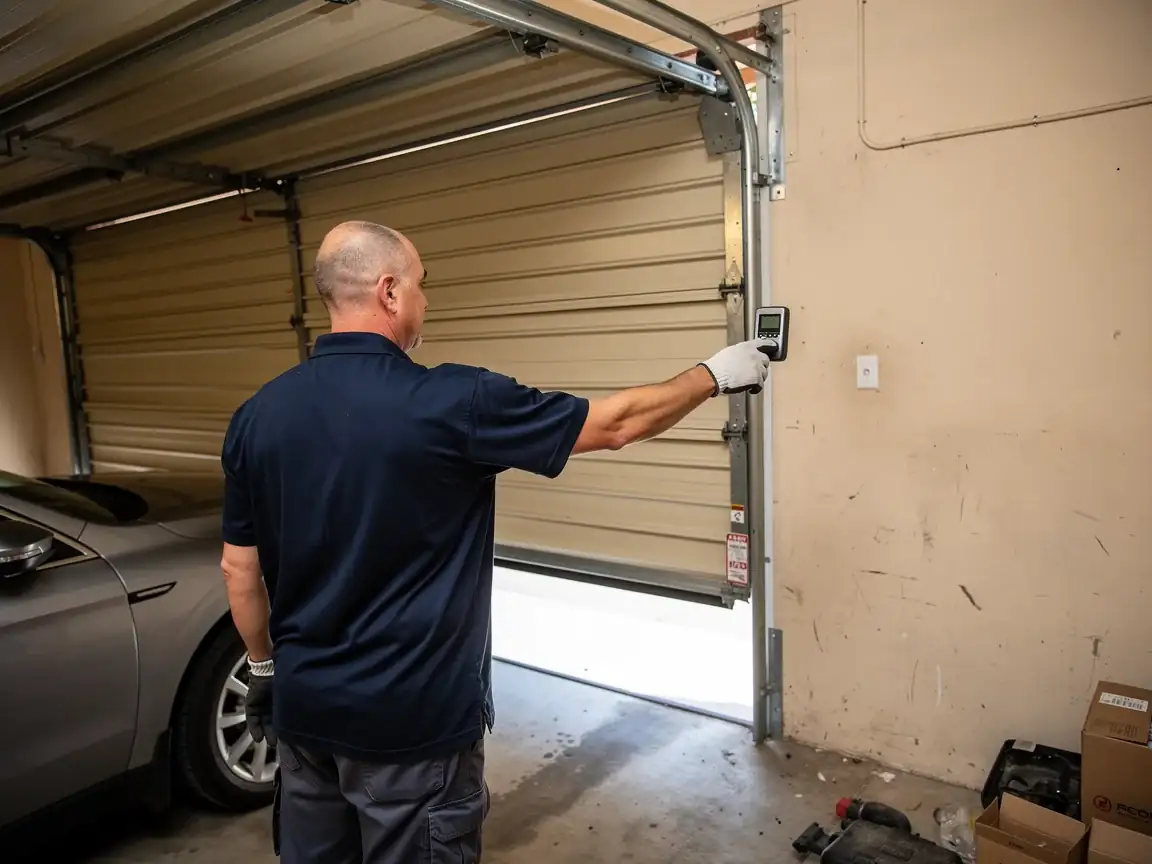
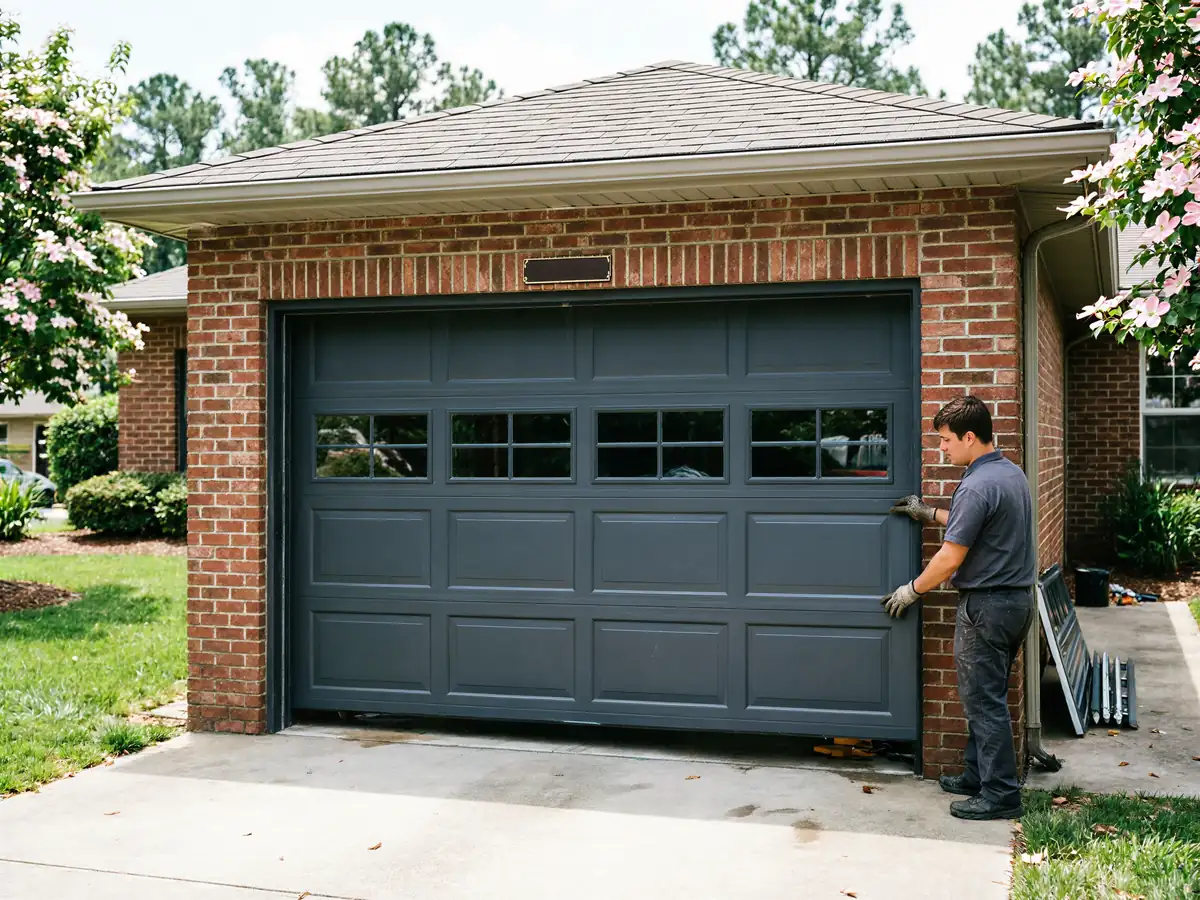
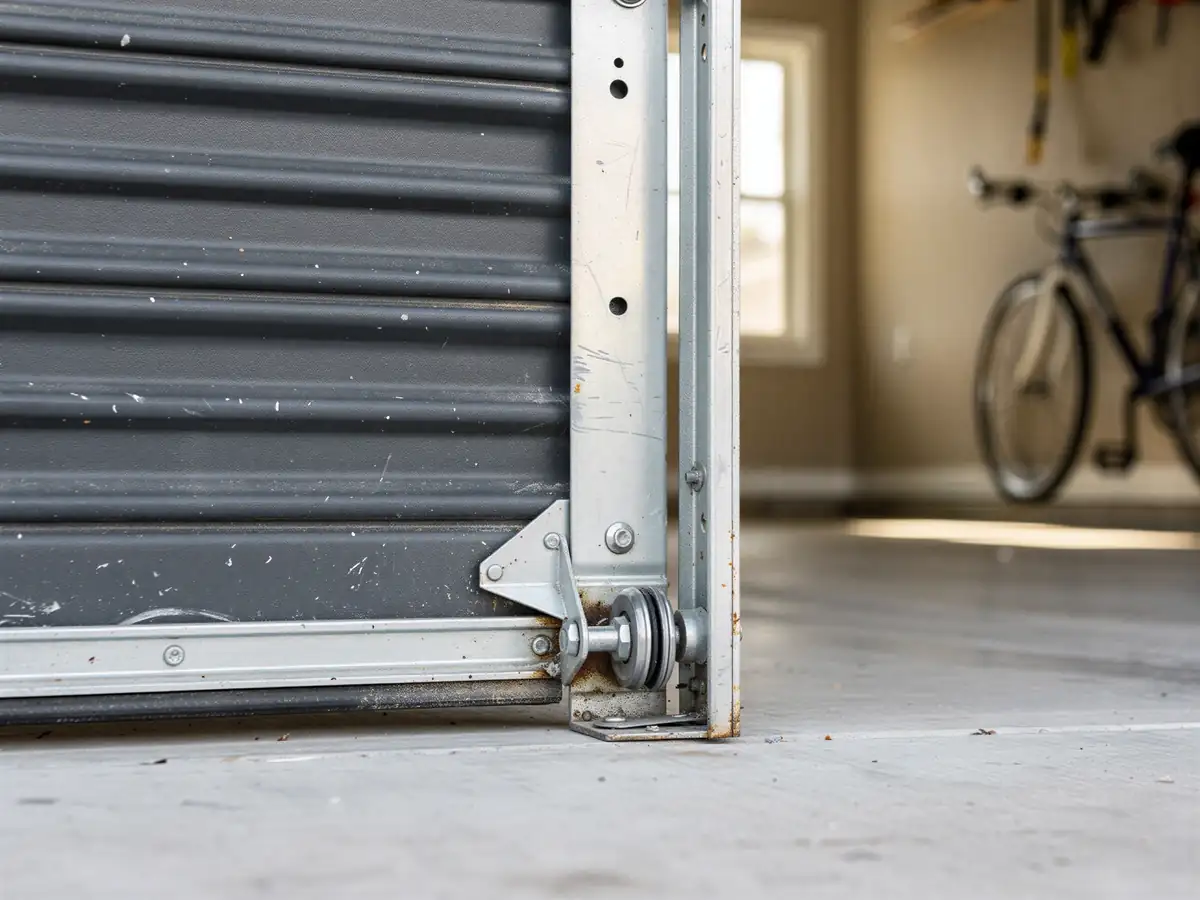
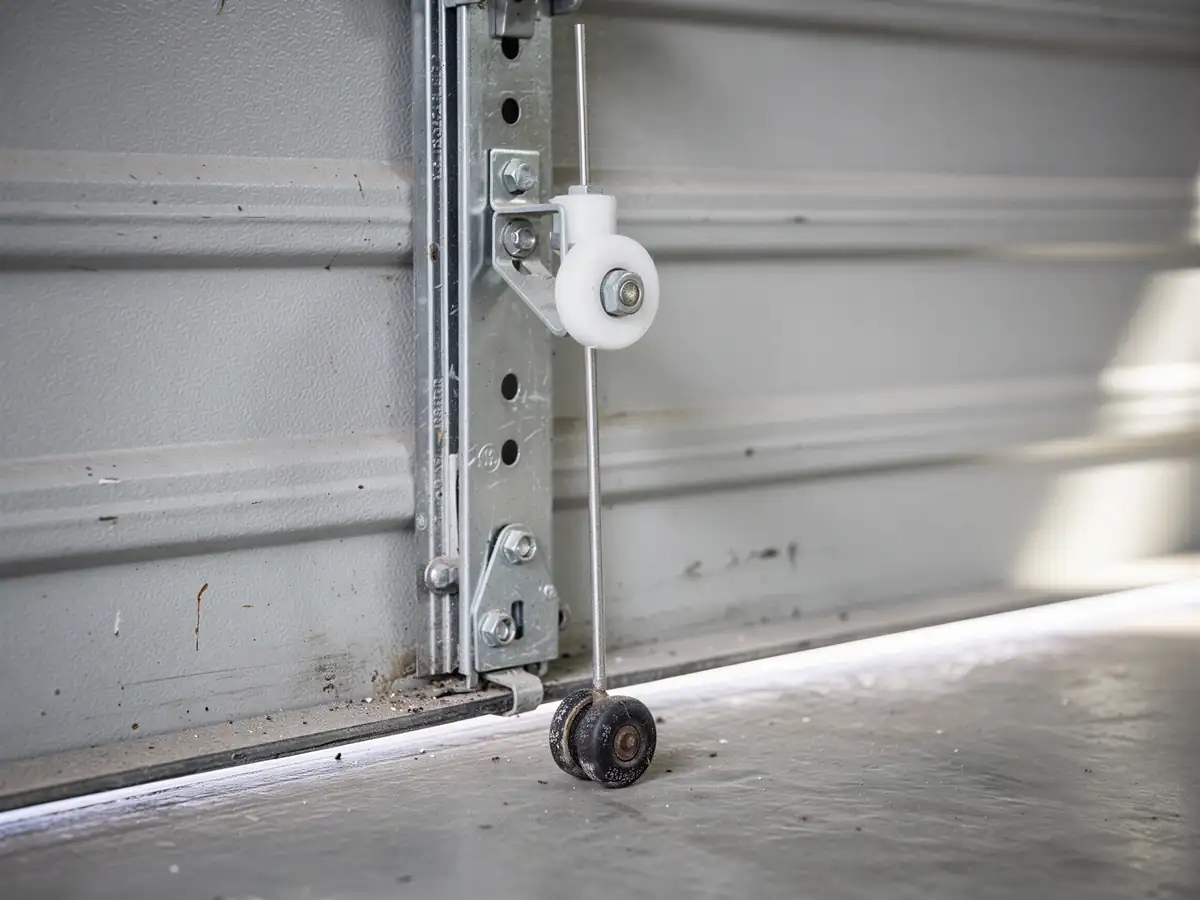
Track misalignment shows up differently: the door shudders partway up, or a roller pops out of the track entirely. On the older stock here, the track was often hung on a wood jamb that's shifted slightly over the decades, so the track itself is still straight but no longer square to the opening. You'll hear it before you see it - a grinding or scraping instead of a smooth roll.
A worn weather seal at the bottom of the door is a smaller problem but a real one in a cold-moderate climate - it lets cold air sit against the bottom panel and makes condensation worse on the inside of the door in winter. None of these are emergencies that require the whole door replaced, but ignoring a dragging track long enough will eventually bend it, which does.
How Long You Are Without the Door
A broken spring or a cable off the drum is usually a same-visit fix once we're on site - that's the most common call we get from houses in this age range, and the parts for standard torsion springs and cables are things we carry. Track realignment is also typically done in one trip.
Where it slows down is custom panels or opener boards for doors that have been discontinued, which does happen on original 1970s-era doors that are still running their first door. If a panel needs ordering rather than straightened, that's a longer wait, and we'll tell you honestly if that's where your job is headed rather than quoting a timeline we can't back up.
We'd rather say a repair isn't worth it than have you pay twice. If the track is bent badly enough, or the door itself has warped from age, replacement ends up cheaper over the life of the door than repeated track repairs. That's not the call on every job, but it's one we make honestly when the hardware is past the point where fixing it makes sense.
How We Fix It
We start with the spring and cable system
Since that's what's doing the lifting and what fails most on houses from this build era. Torsion springs get replaced in matched pairs, not single springs, because a mismatched pair just transfers the strain to the new one and you're back to a broken spring within months.
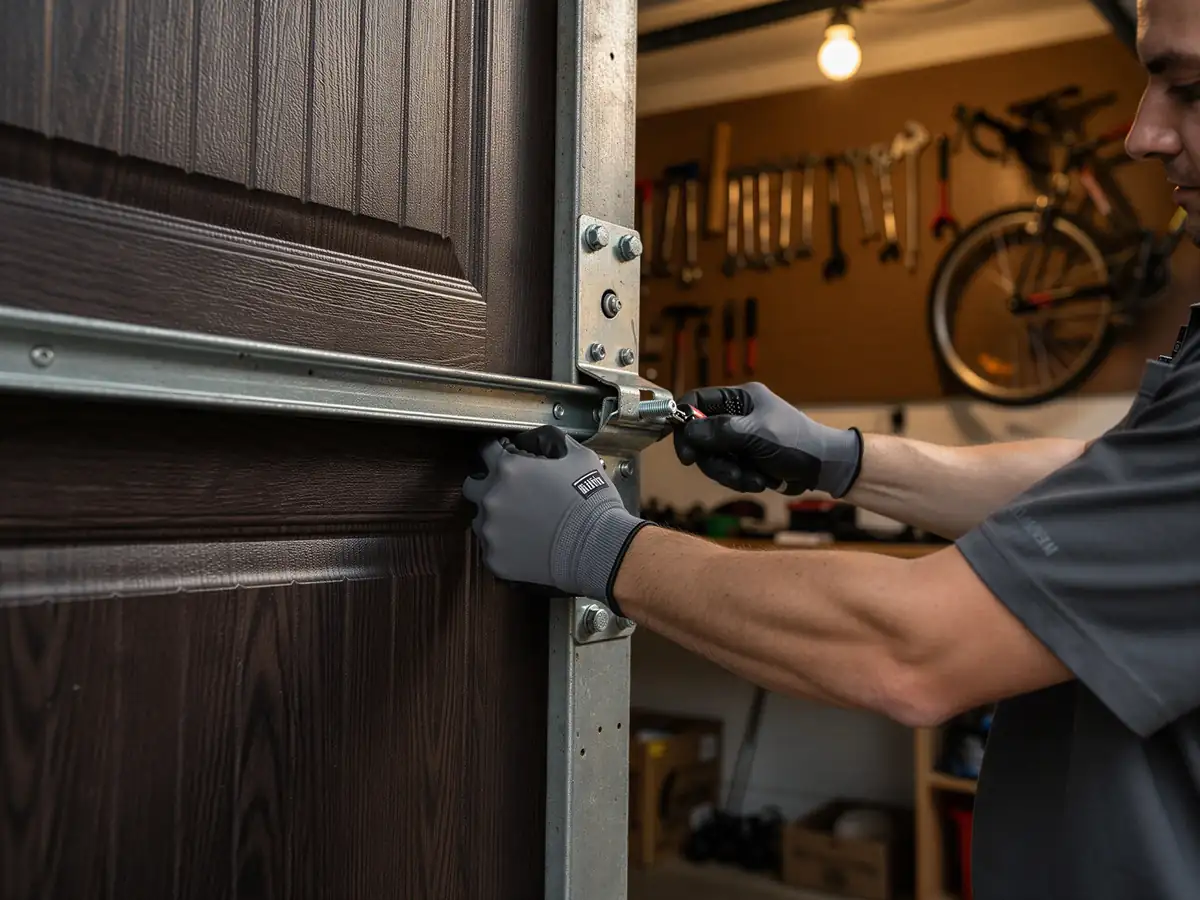
For track issues, we re-square the track to the jamb rather than just bending it back by eye
Which matters more on older houses where the opening itself has settled slightly over fifty years. Rollers that are worn get swapped at the same time, since a new track with old, flat-spotted rollers still grinds.
We run calls across the service area
Including into a mile northeast a couple of miles north of the core of town, along with the rest of the neighborhoods that share this same 1960s-70s housing stock. Back to home