Why It Happens Here
A lot of the garage doors we open up across Norfolk are riding on the rollers they shipped with
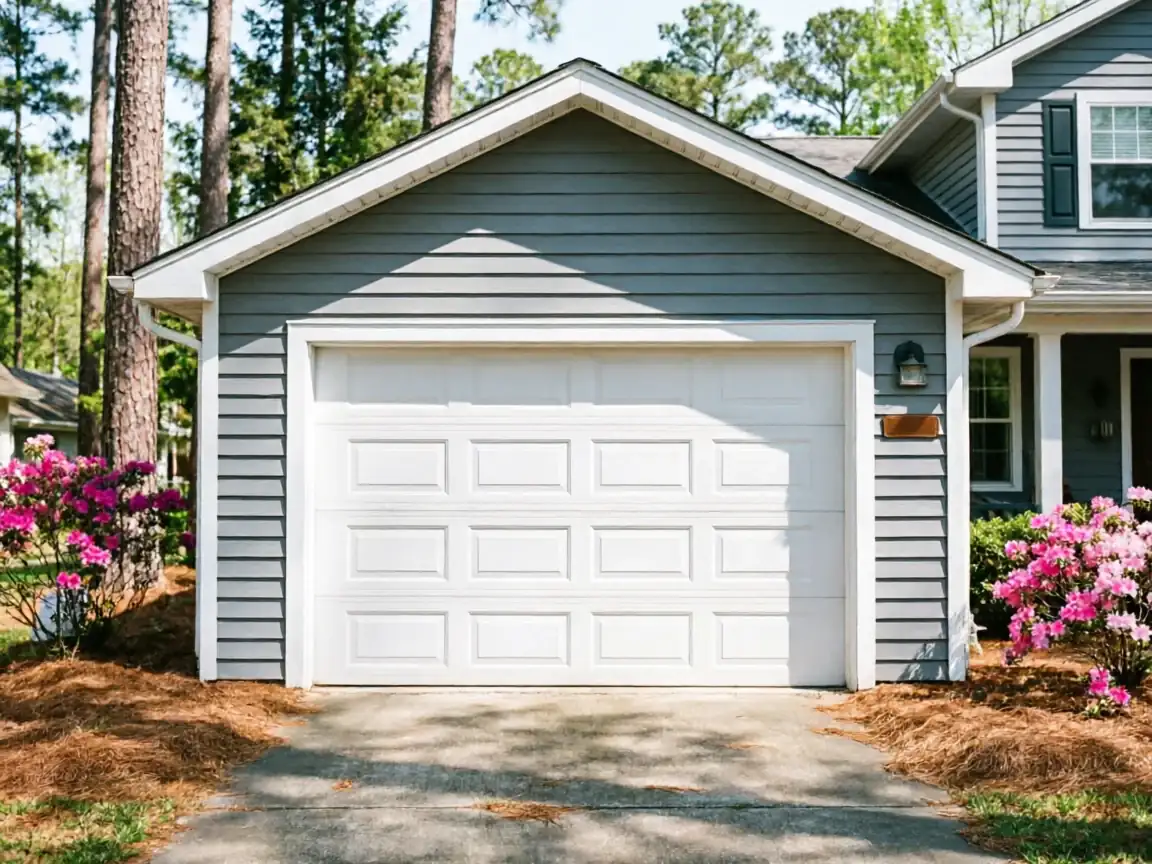
Most of the houses in this service area went up between 1966 and 1977, with the median build year sitting around 1971, and that generation of door came standard with plain steel rollers on steel stems - no nylon, no sealed bearing, nothing to cushion the ride. Steel-on-steel wears fast, and fifty-plus years of daily travel up and down a steel track takes its toll even on a door that's otherwise sound.
Norfolk's climate doesn't help
We're in a cold-moderate band, which means the metal in that track and those roller stems goes through real seasonal swing - contracting in the cold months, expanding again as it warms. Over decades that cycle works old rivets and worn roller grooves loose, and it's a big reason we see bent stems and flat-sided rollers on doors that are otherwise original. Two of the older pockets of housing stock in this area are almost entirely this same vintage, so if your neighbor's roller just failed, yours is on a similar clock. This is a wear problem built into the hardware era, not a defect in any one door.
What You Are Seeing
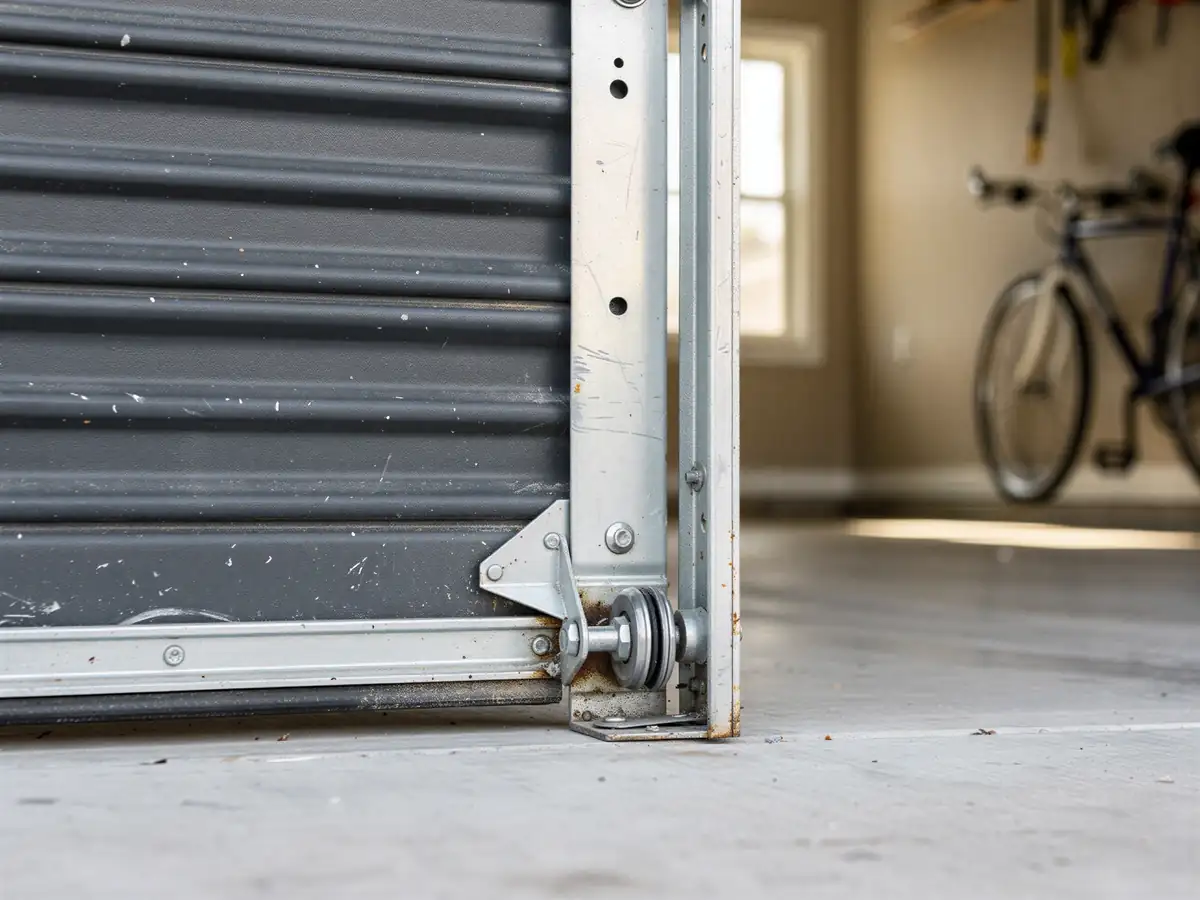
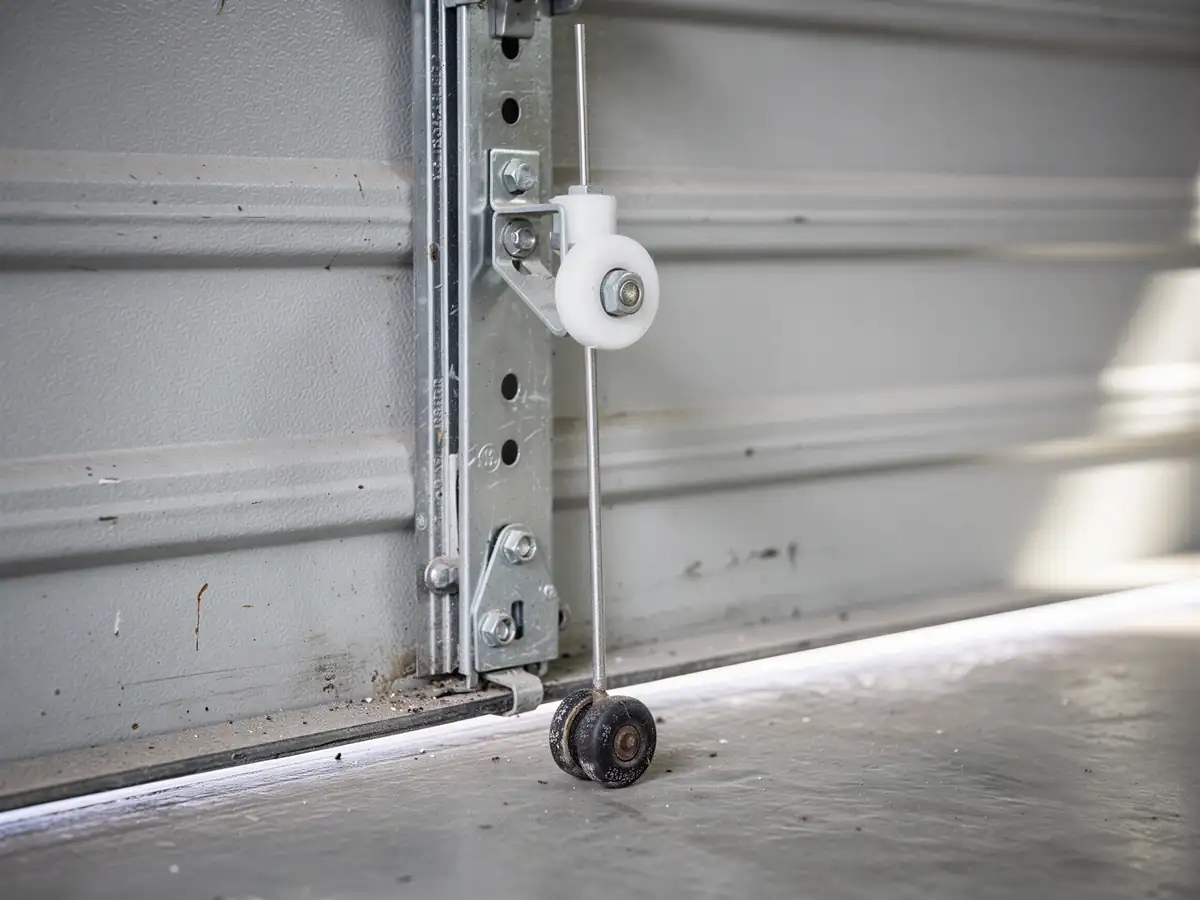
The usual complaint is noise first - a grinding or clunking as the door travels, worse at the top or bottom of the run where the roller crosses the curve in the track. Look at the rollers themselves and you'll often see a flat spot worn into one side, or a stem that's bent slightly off true, which throws the whole roller at an angle in the track.
Sometimes a homeowner calls because the door is binding, catching, or refusing to close smoothly rather than for noise. That's usually a roller that's worn down enough to drop out of the track groove partway through the cycle, or a stem that's cracked at the roller housing and about to let go entirely. On older steel-roller doors like the ones common in this area's 1960s-70s stock, you'll sometimes find three or four rollers worn unevenly because they were never swapped as a set - one bad roller puts extra load on the ones next to it, and the wear snowballs from there.
How Long You Are Without the Door
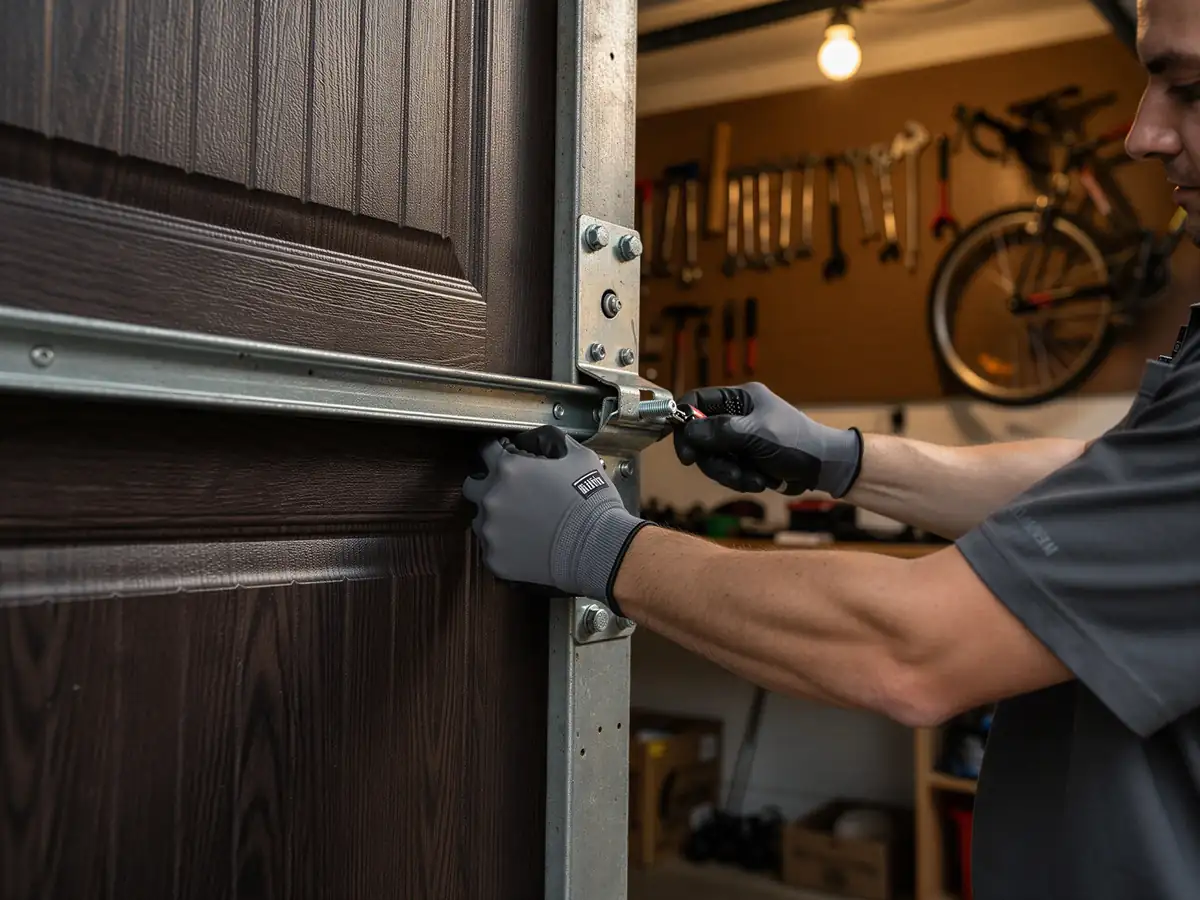
A straight roller swap on a door that's otherwise in good shape is a same-visit job - we pull the worn rollers, fit new ones, run the door through its full cycle, and you're back to normal use before we leave. The door isn't down for days.
Where it stretches out is when the rollers have been bad long enough to bend the track itself or crack a hinge where the stem rides. That's a different repair, and if a part isn't something we carry on the truck, you're waiting on it to come in rather than us finishing the same day. We won't pretend every job on a fifty-year-old door is a quick in-and-out - on original hardware from the 1966-1977 era, it's common to find the track, hinges, and rollers all need attention together once you're inside the system.
How We Fix It
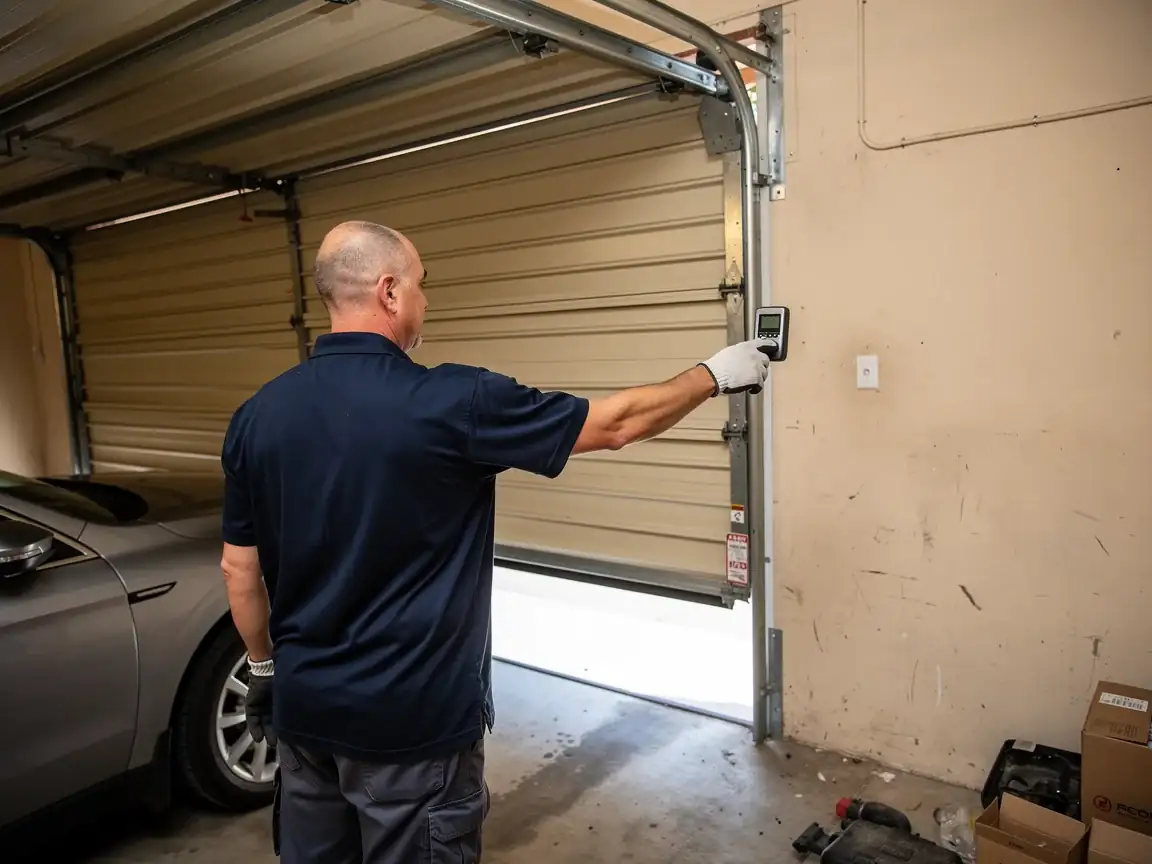
We start by running the door and watching the full travel
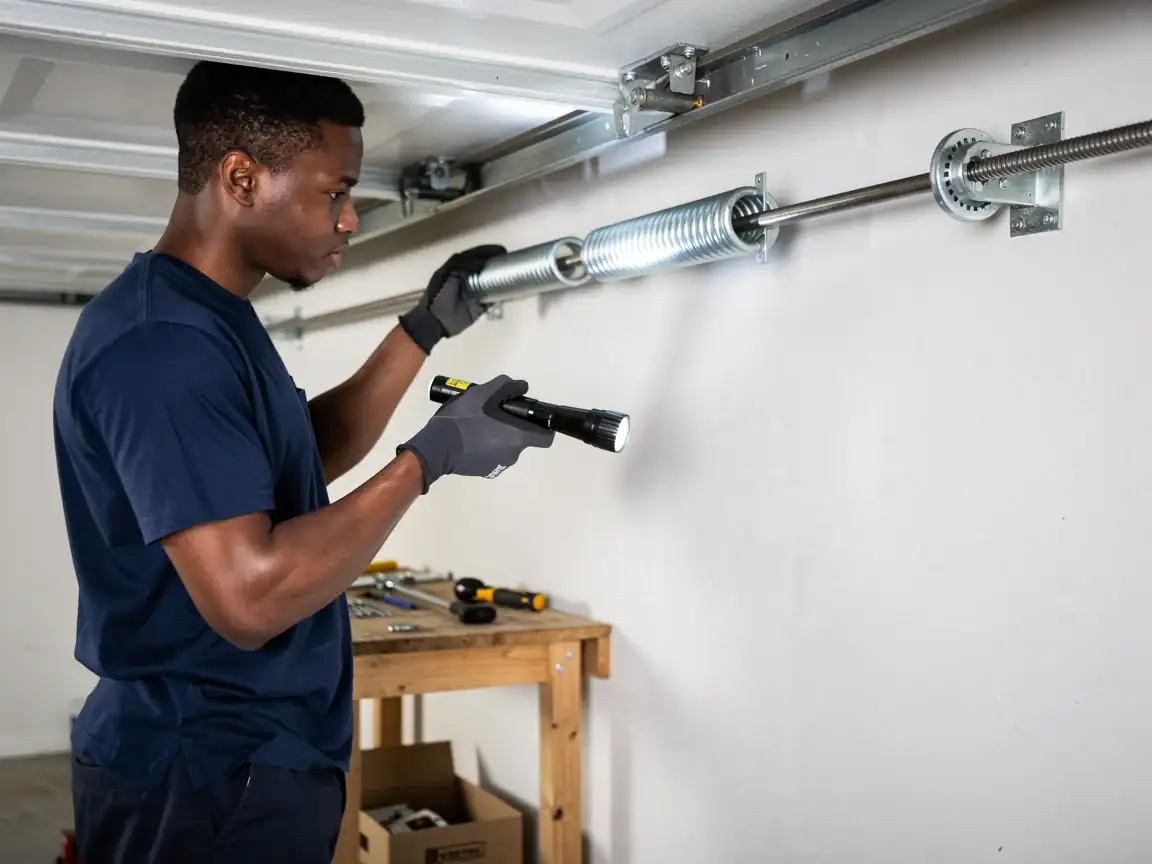
Most roller failures show themselves in how the door moves before you ever touch a wrench. We check each roller for flat spots, stem wear, and play in the track groove, and we check the track itself for the kind of wear pattern that steel rollers leave after decades of use.
If the rollers are the problem and the track is straight
We replace the worn rollers with a better-wearing roller and send the door through its cycle again to confirm it rides quiet and square. If the track has worn unevenly from years of steel-on-steel contact, we tell you that straight out rather than just swapping rollers onto a track that's going to chew through the next set the same way. On a door this old, replacing rollers without checking the track they ride in is a half-job, and we don't do half-jobs.