Stocked Parts
Poquoson's housing stock centers on 1977
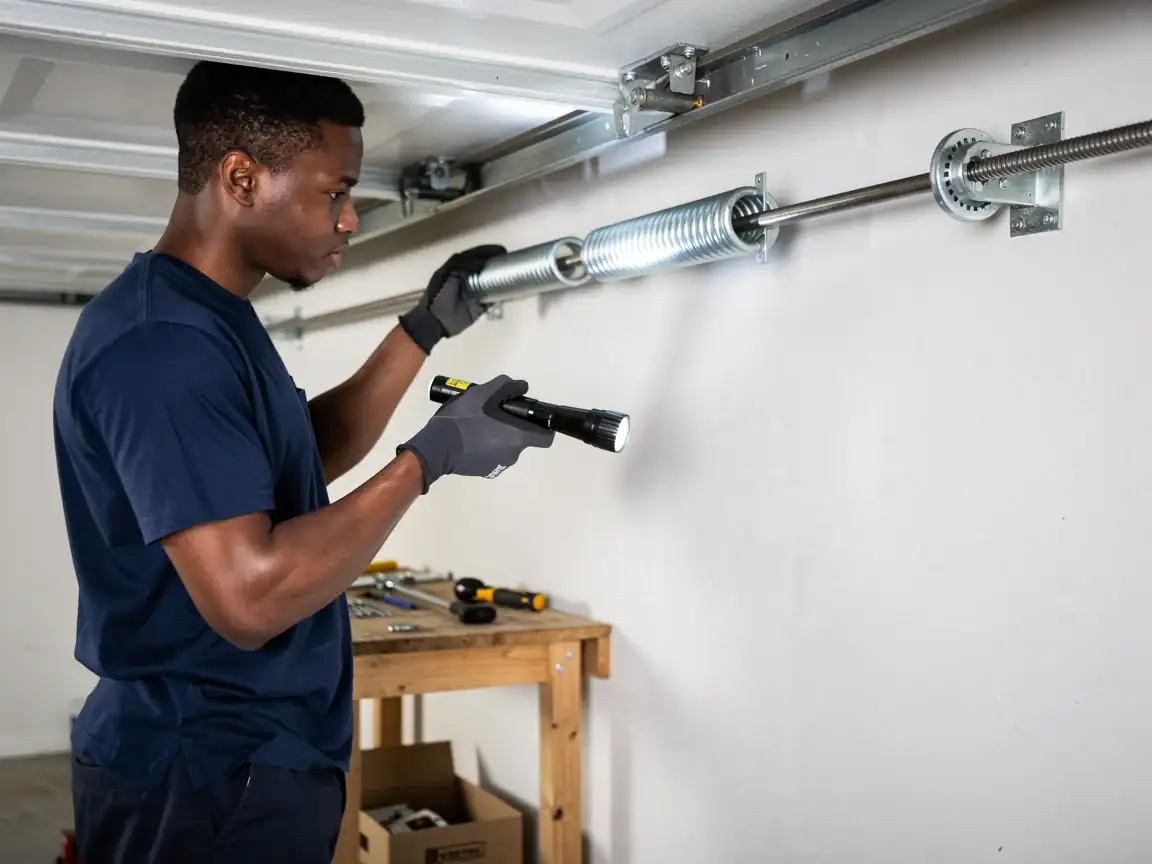
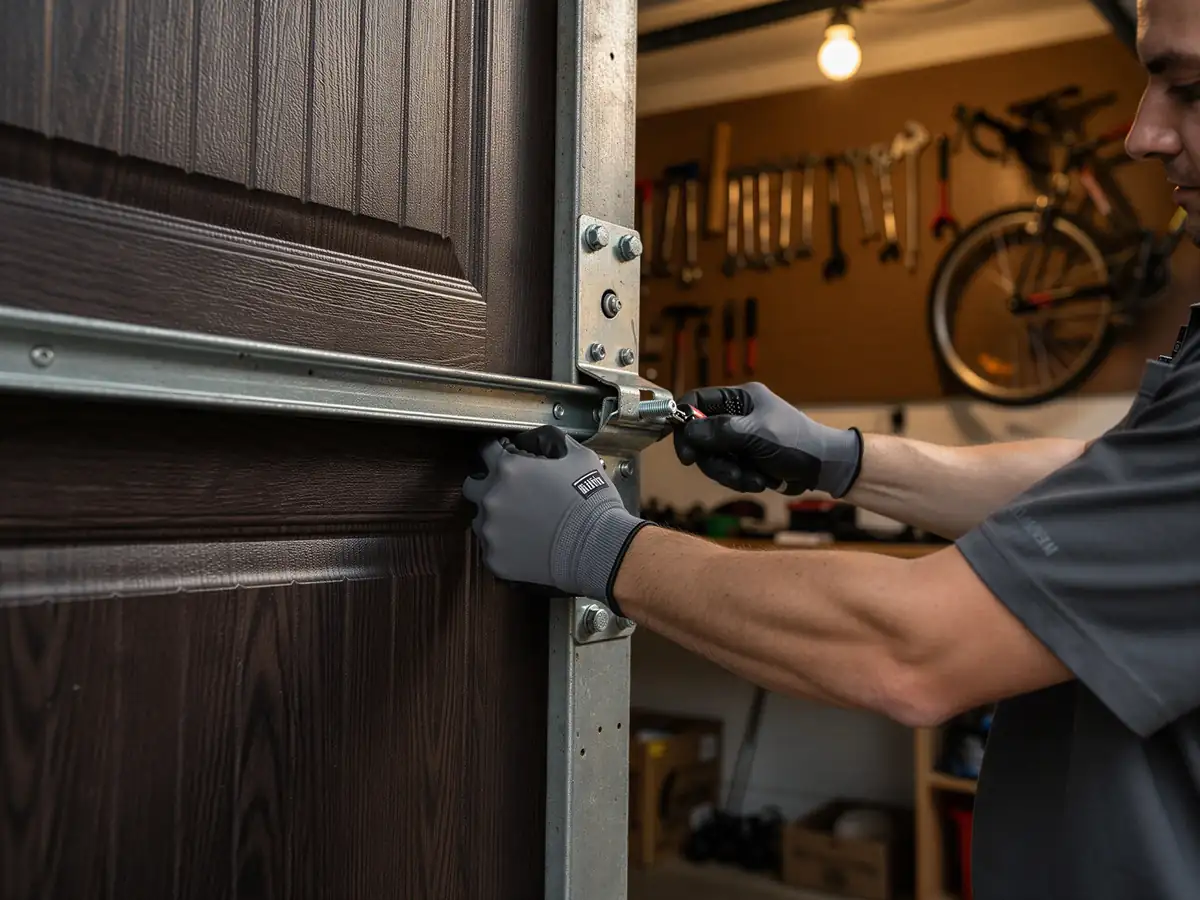
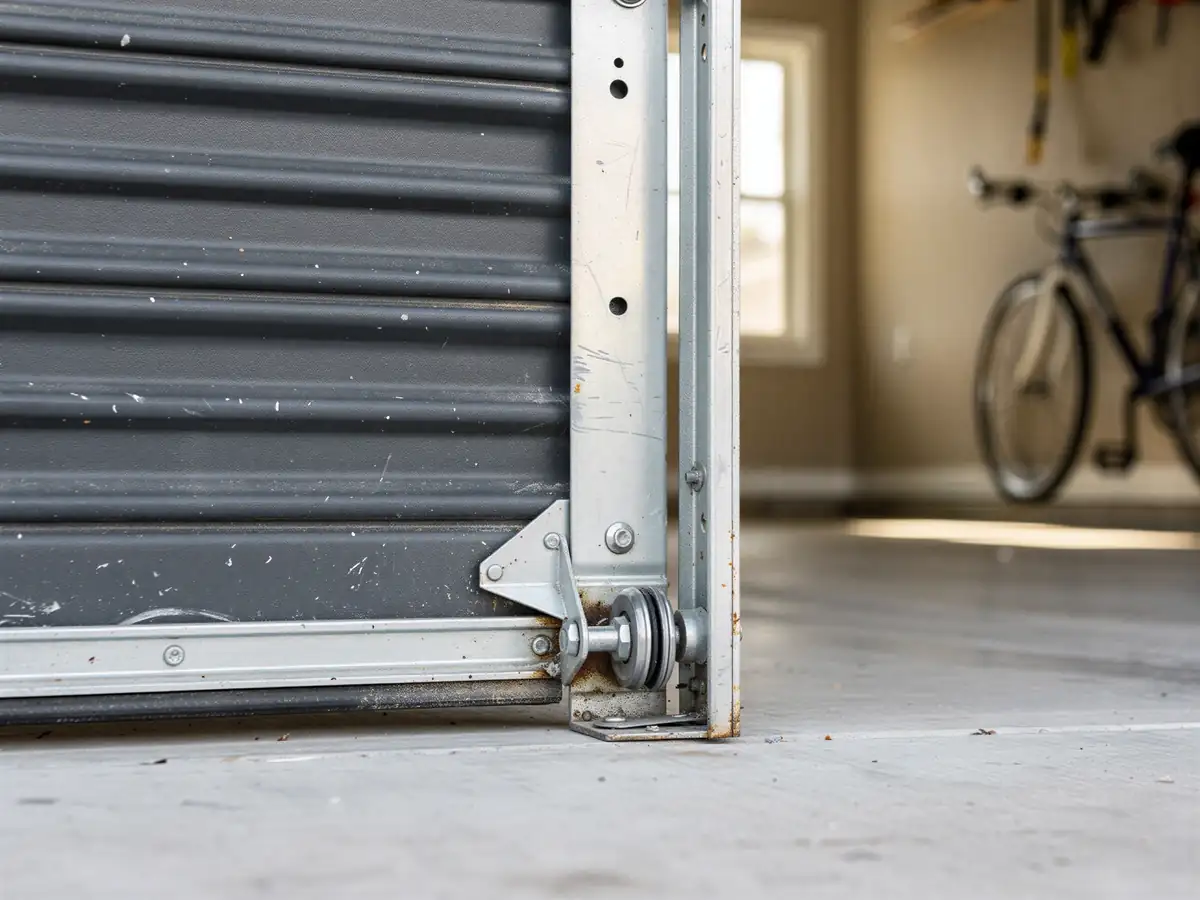
Which puts a lot of doors here on the tail end of the galvanized steel track and raw-steel hinge hardware that builders used before plastic-coated rollers became standard. If your door has never been touched, there's a decent chance the track brackets and hinges are the same ones bolted in during construction. That hardware doesn't fail dramatically - it fatigues, and a door that's been riding slightly bent track for years finally jumps the roller when a cable stretches or a spring loses tension.
We don't keep a parts counter in Poquoson
We run the stock on the truck from Norfolk, which covers standard track sections, nylon and steel rollers, hinges, and cable. Vertical track in 8- and 10-foot runs covers most single and double doors from this build era without a special order. If your door uses an odd curve radius or a track profile from a manufacturer that's since changed spec, that's the one case where we have to order and come back - we'll tell you up front if that's what we're looking at rather than guess.
How We Fix It
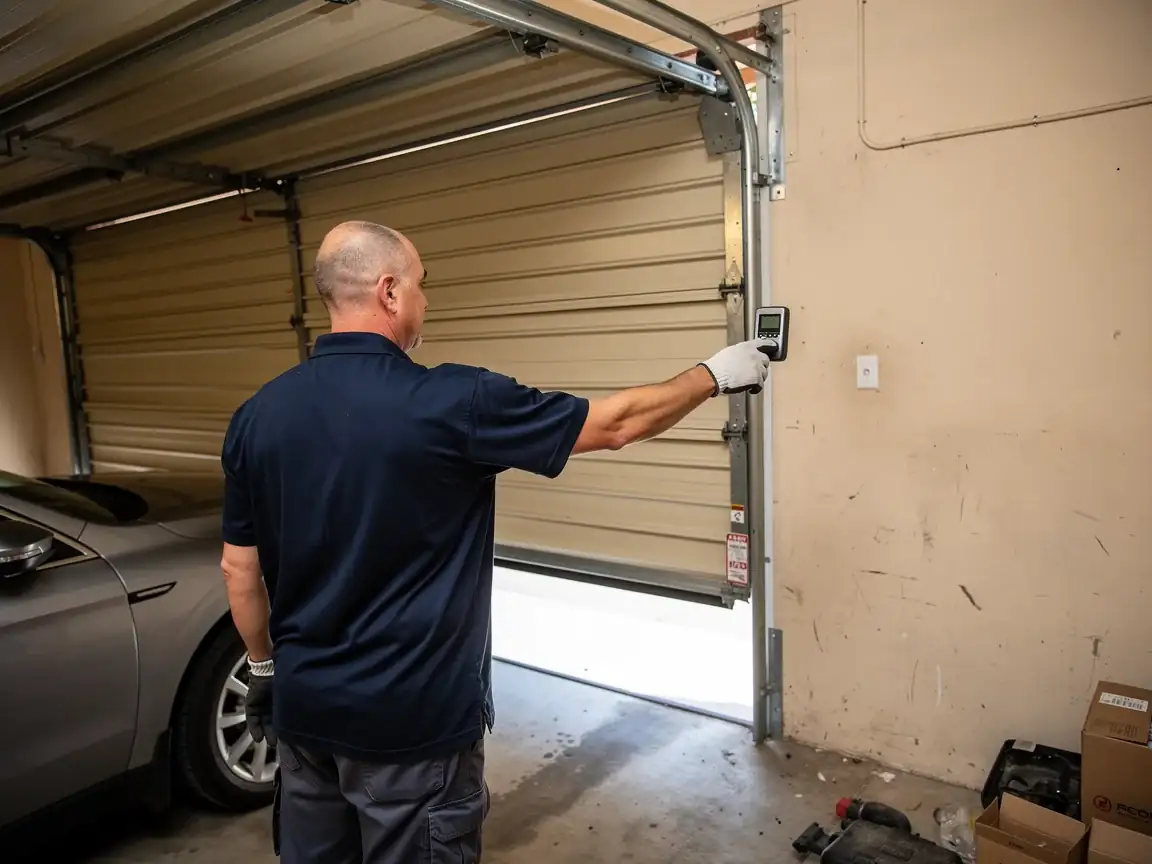
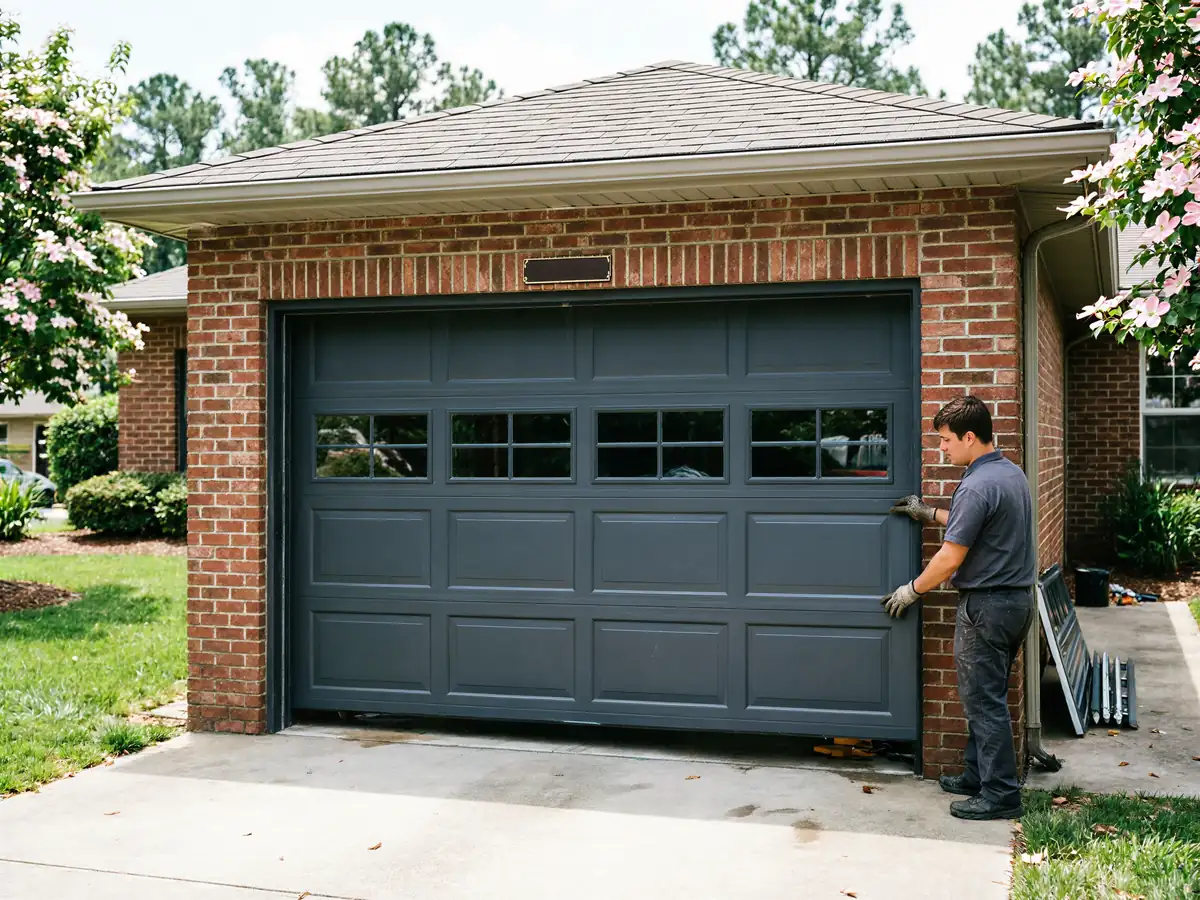
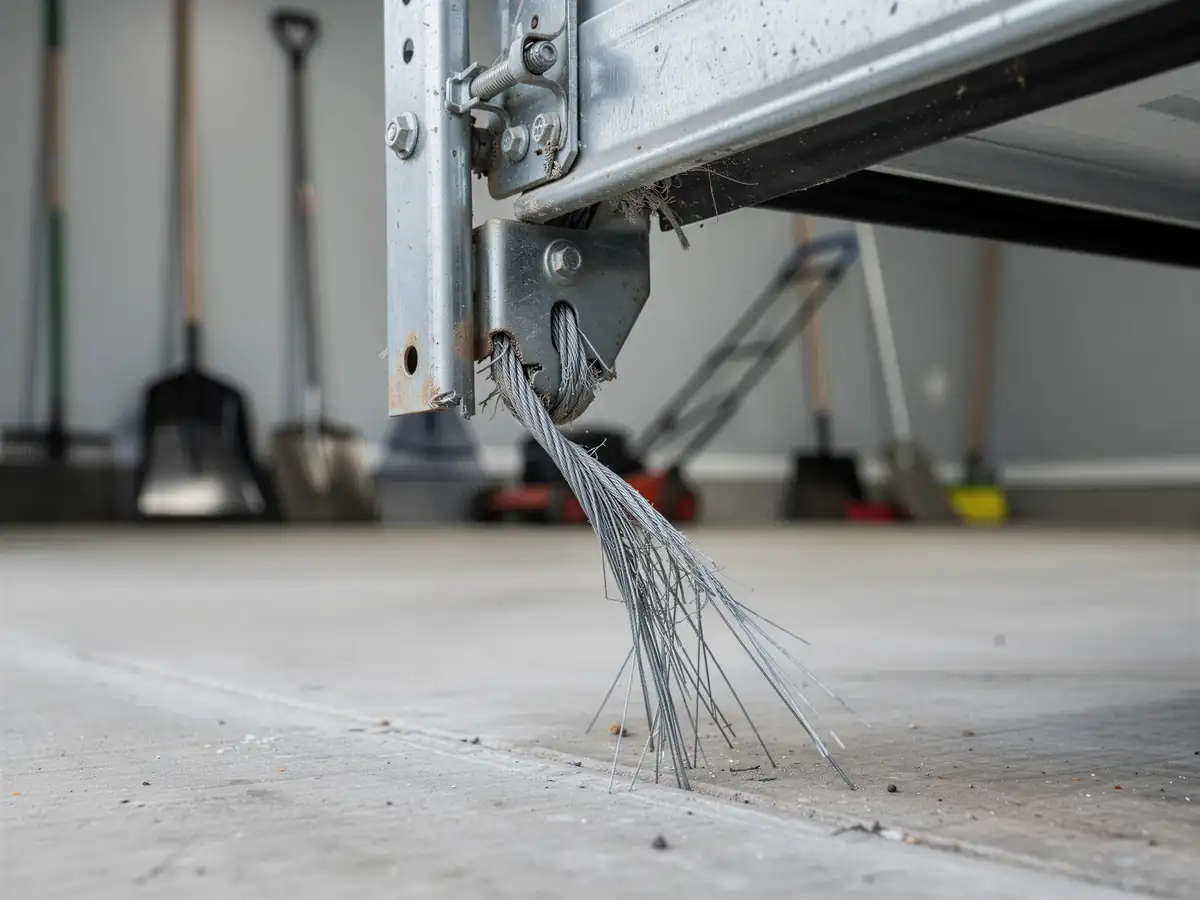
First thing on site is figuring out whether the door came off because the track moved or because something pushed it off - a broken cable, a snapped spring, or a roller that finally gave up. On a door that's original to 1977, we're checking the track-to-jamb bolts first, since 47 years of seasonal expansion in a coastal-cold-moderate climate loosens lag bolts and lets the whole track rack out of plumb a little at a time.
If the track itself is just bent - a common result of a car bumper tap or a jammed roller forcing the rail sideways - we take the affected section down, true it up or swap it, and reset the rollers before running the door through a full cycle under power. If the hinges are the galvanized originals and they've worn oval at the pin, we replace those too rather than put a new track against worn hinges, because that combination comes off-track again within months.
We don't force a bent panel back into a track that's otherwise sound just to save a trip - if the panel's crimped, that's a different repair and we'll say so before we start.
How Long You Are Without the Door
We're coming from Norfolk, about 15 miles out, so there's no local branch sitting around the corner in Poquoson and we're not going to pretend otherwise. Once we're on site, most off-track jobs - track realignment, hinge and roller swap, cable reset - run in a single visit, because the parts involved are carried on the truck. The exception is a bent or rusted-through track section that needs an exact match to the existing rail; on an older house that still has its 1977 track, that's occasionally a return trip while we source the right profile.
In the meantime, leave the door where it sits. A door that's partway off its track can look driveable but the opener will keep trying to pull it along a path it can't follow, which stresses the cable drum and can snap a cable under load. Disconnect the opener and leave the door manually, closed if possible, until we get there.
What You Are Seeing
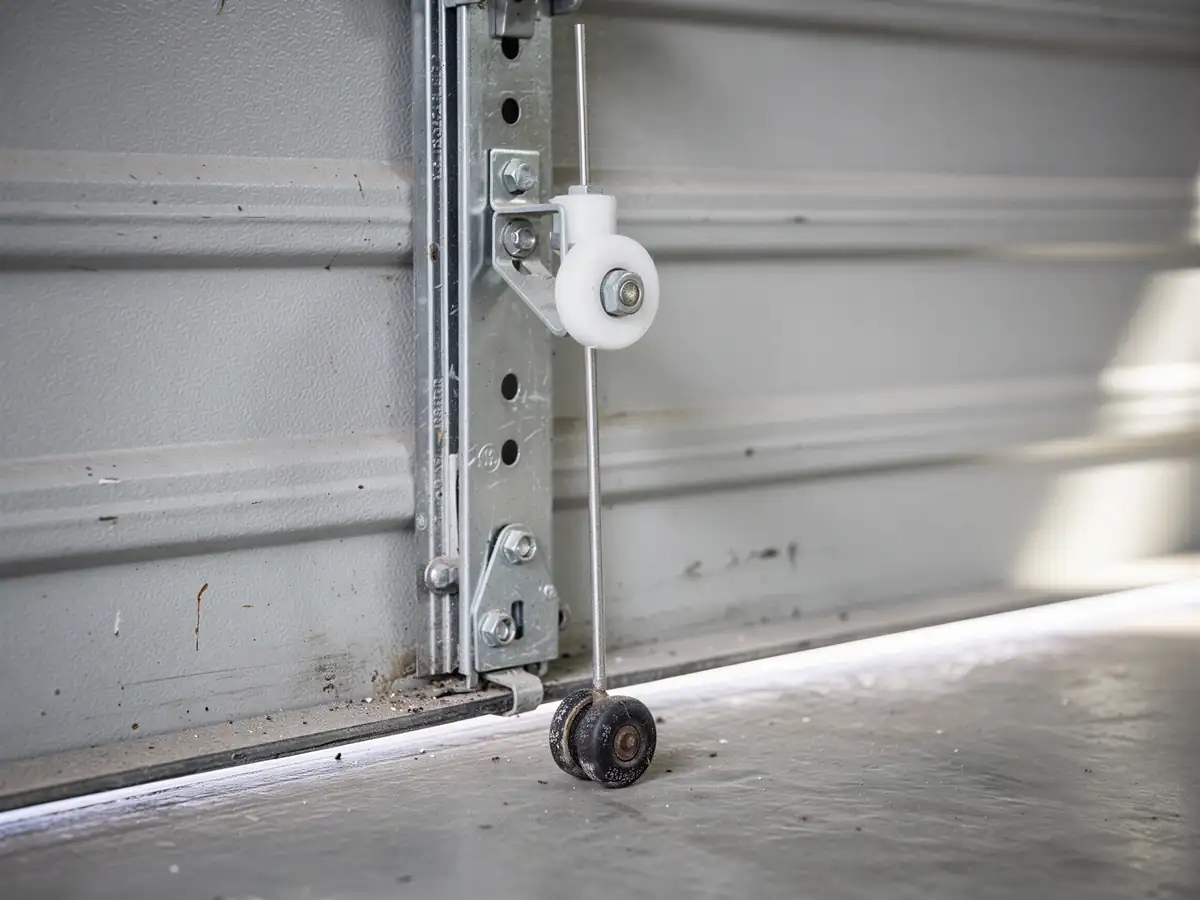
The usual sign is a door that stops mid-travel with a visible gap between the roller and the track on one side
Often with the bottom corner of the door canted a few inches out of square. On double doors, it's frequently one side that's walked off while the other tracks normally, which points to a track bracket loose on one jamb rather than a problem with the door itself.
Some homeowners notice it first as noise
A grinding or scraping sound right before the door hangs up - which usually means a roller has already left the track and is dragging against the rail edge. If you hear that, stop running the opener. Continuing to cycle the door with a roller off the rail is how a minor misalignment turns into a bent track or a cracked panel stile, which is a more expensive fix than catching it early.