The Complications
Start with the number that actually decides the job
Median household income in Portsmouth sits at $58,972, well under the $89,945 median for the wider Norfolk service area. That gap matters more than it sounds like it should, because a full track-and-hardware rebuild on an off-track door runs into real money fast, and at this income level a lot of households are weighing that cost against just keeping the old track aligned one more season.
Across the service area there are 44,335 households and 18,776 owner-occupied houses
So a sizable share of the housing stock is owner-held and aging in place rather than turning over to new buyers who'd replace the door outright. In Portsmouth specifically, with roughly 39,678 households, that same pattern holds. The complication isn't that the door is hard to fix. It's that the choice between a $150 bracket repair and a $900 track-and-roller overhaul lands differently here than it would in a neighborhood with a higher median income. We tell people straight when a repair will hold and when it's just delaying the same call six months out.
- 44,335 households
- 18,776 owner-occupied
- 39,678 households
Booking a Visit
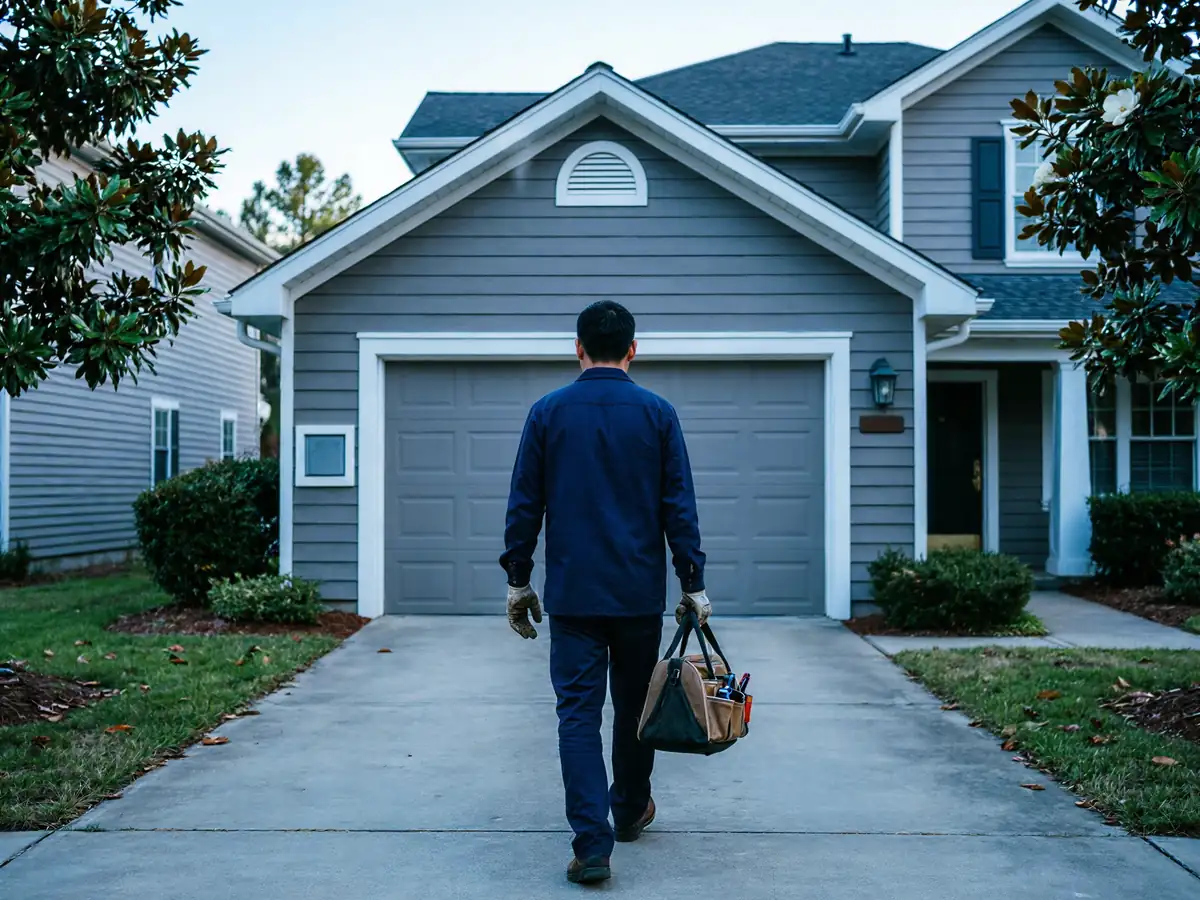
We run this call out of Norfolk, about 8 miles from Portsmouth. There's no branch office here and we won't pretend otherwise - the crew and the truck come from Norfolk every time. That means we don't quote a same-day guarantee for Portsmouth specifically; we quote what we can actually deliver once we know the job.
For general service-area coverage and what else we handle near Portsmouth, see the Portsmouth area page. If you want the fuller rundown on off-track repair as a service rather than this town page, that lives on the Norfolk off-track repair page.
One honest limitation: original 1960s track hardware and the brackets that came with it aren't something we keep ten of on the truck. If your door needs a part that matches hardware from that era, we may need a day or two to source it rather than finishing in one visit. We'd rather tell you that up front than promise a same-visit fix we can't back up.
What You Are Seeing
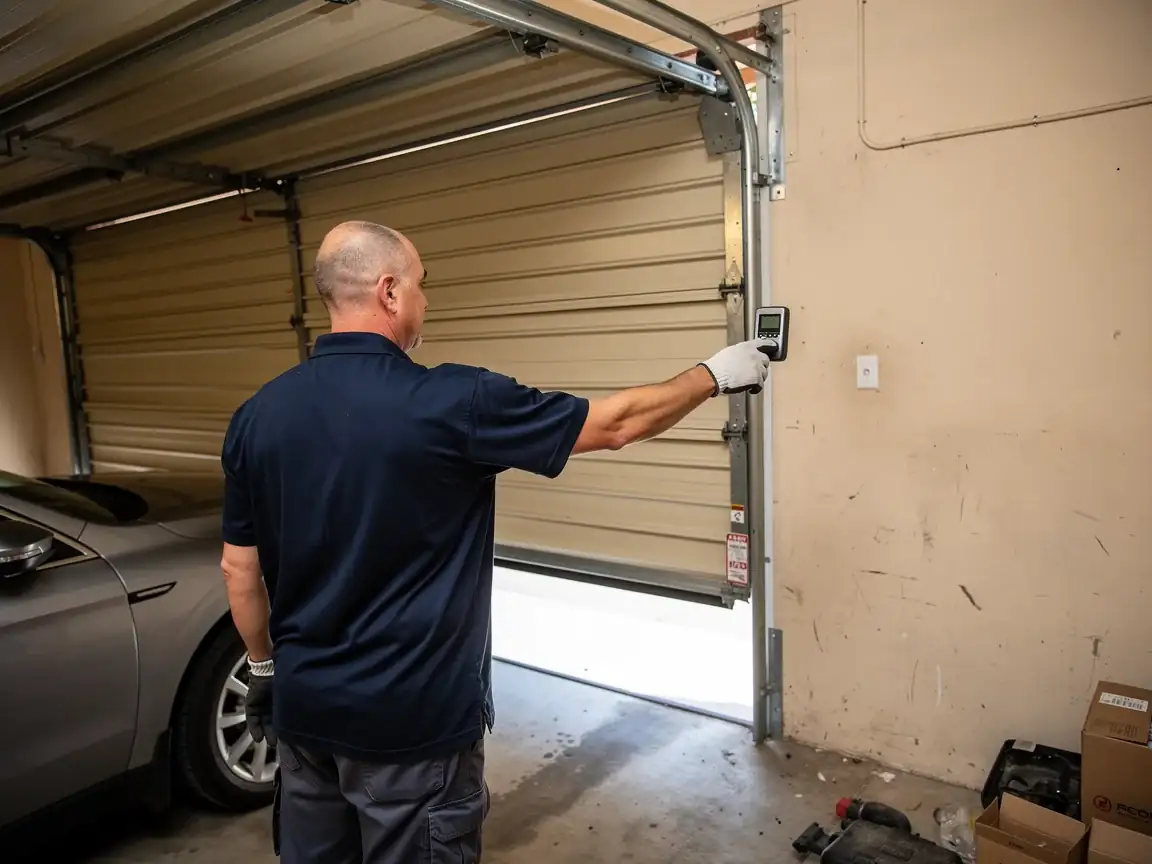
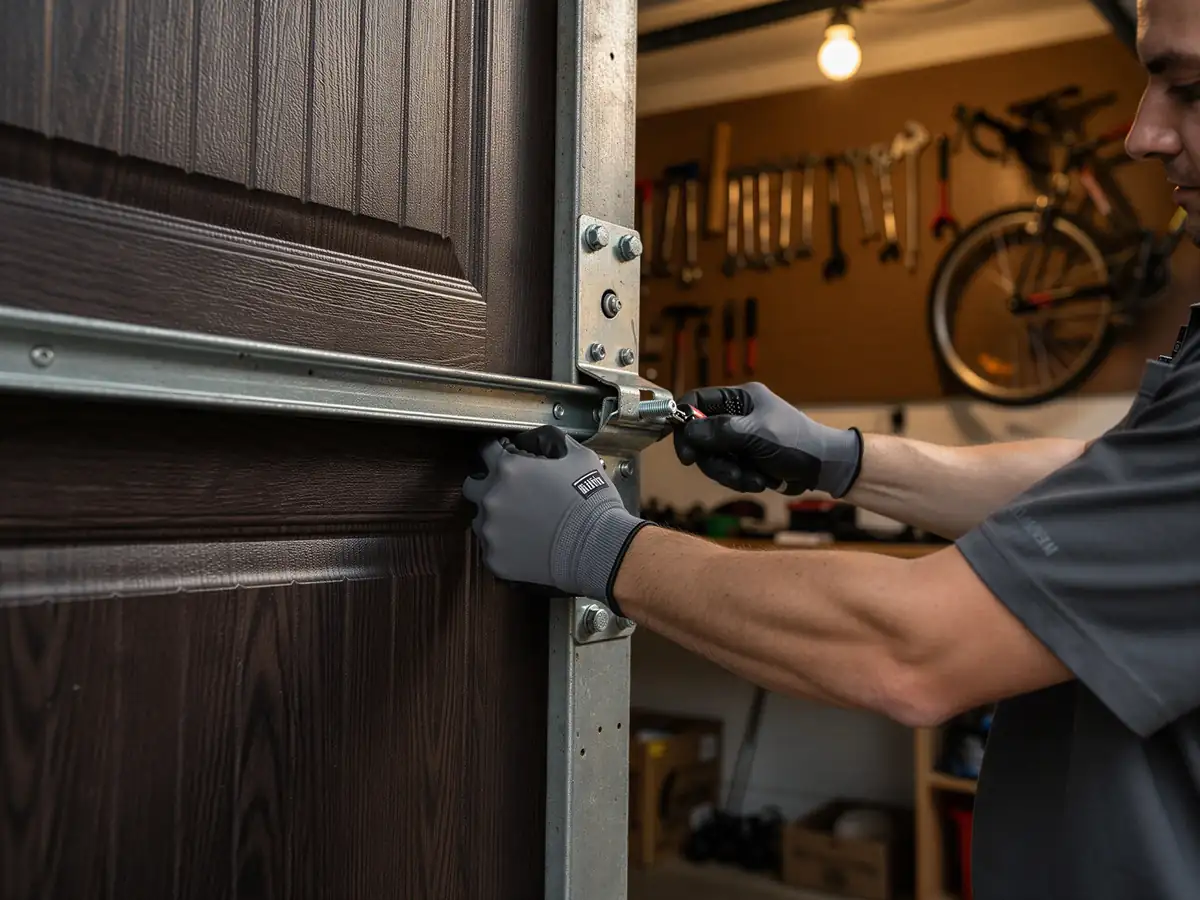
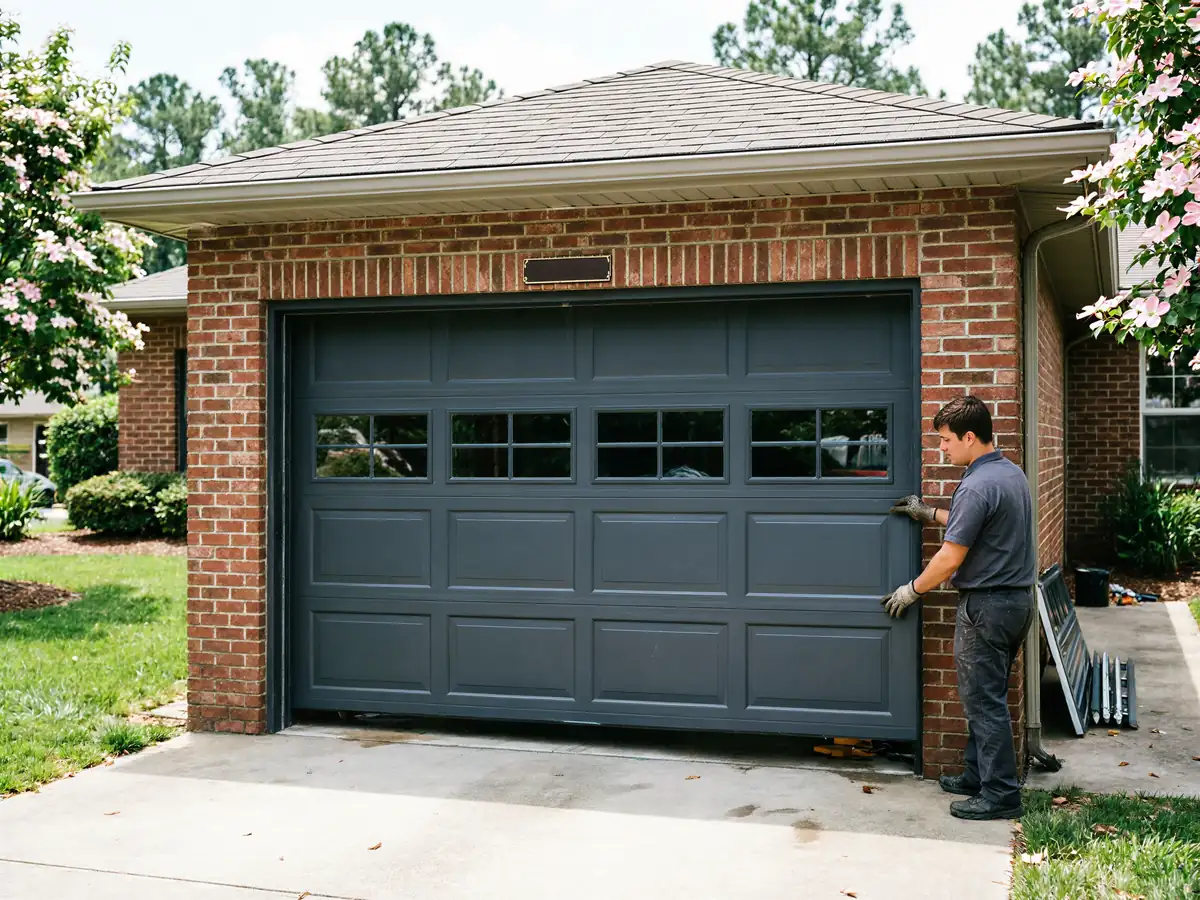
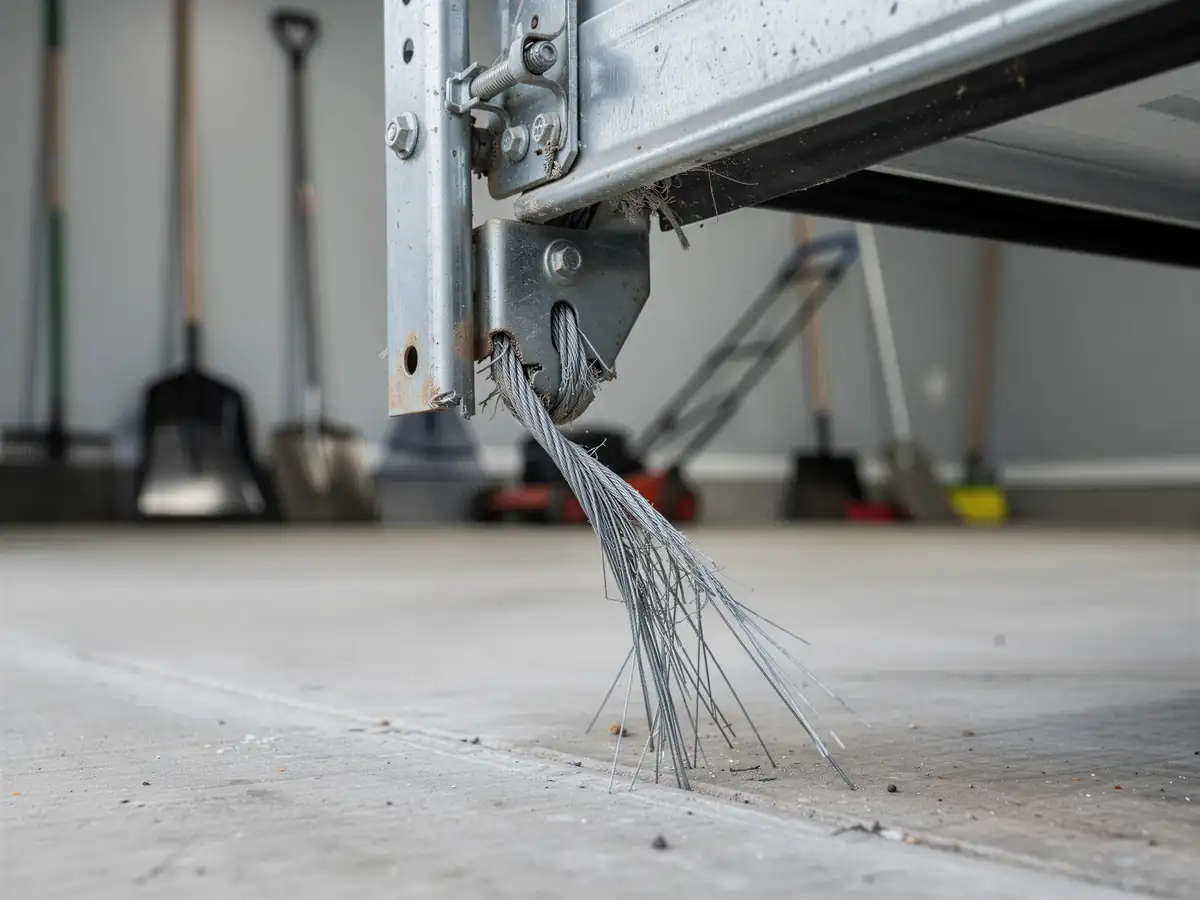
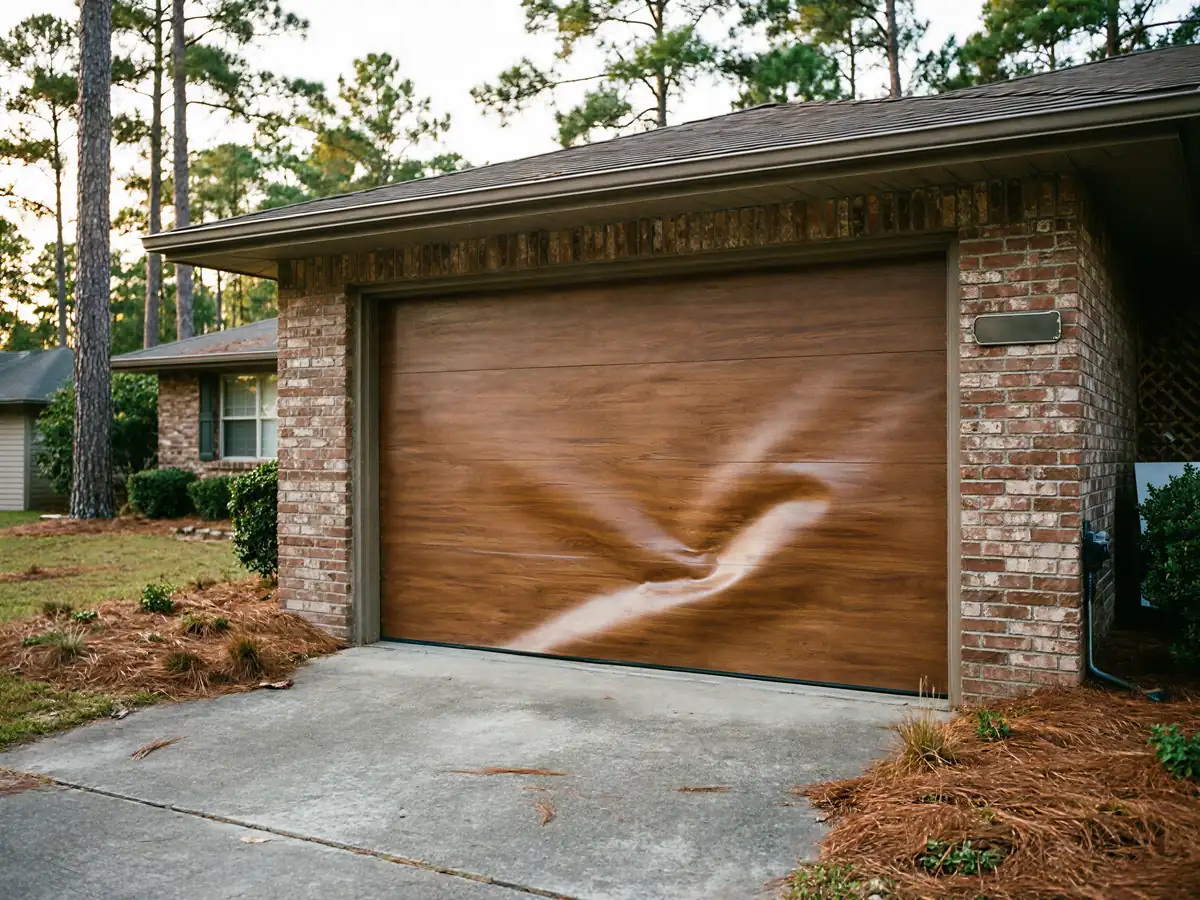
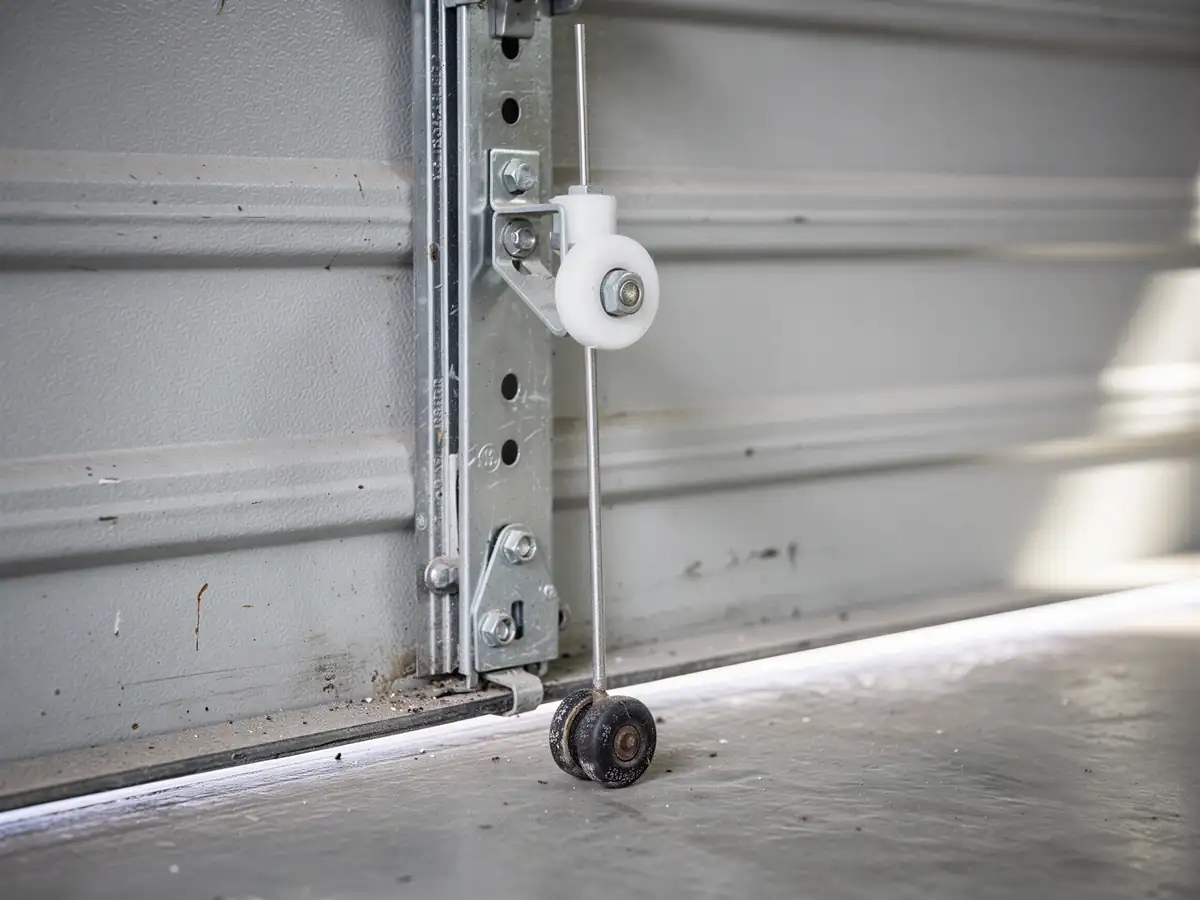
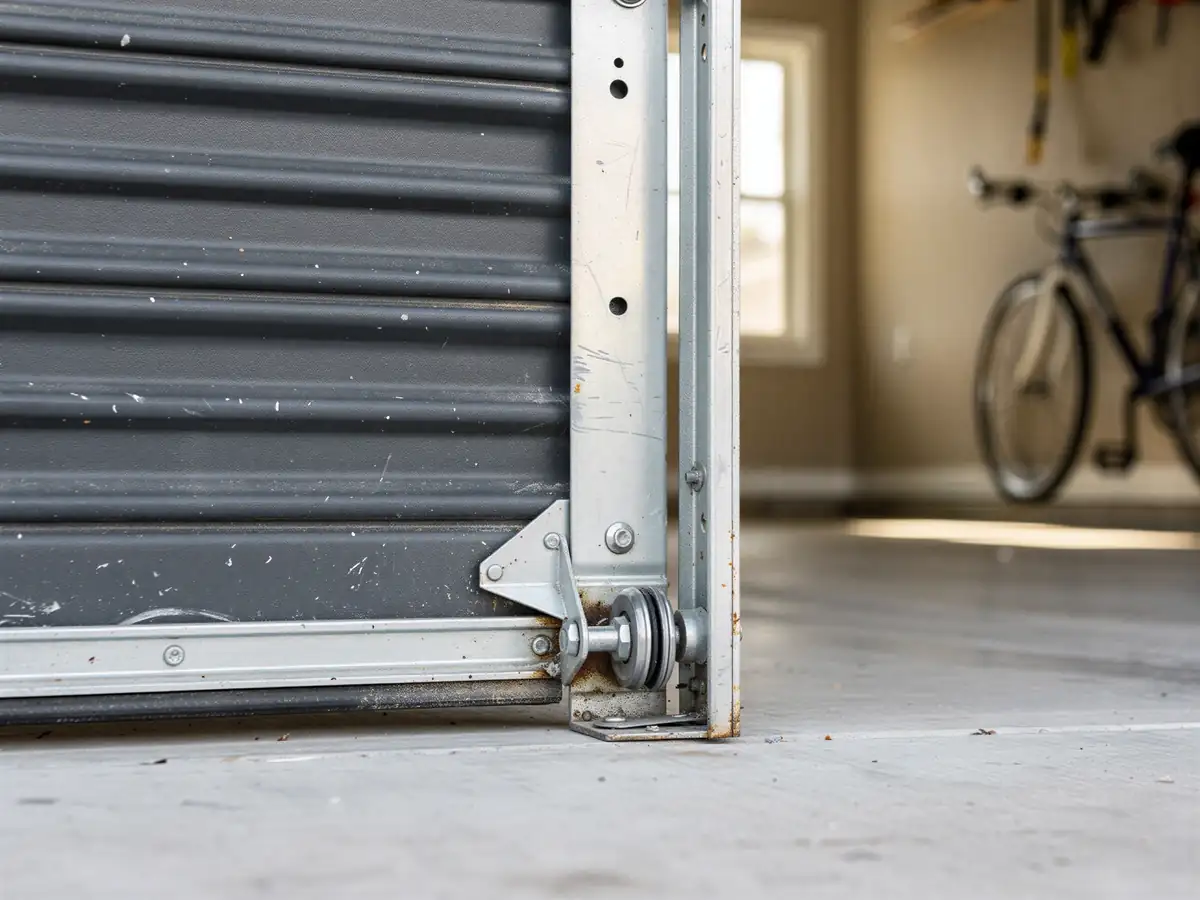
An off-track door usually shows itself the same few ways: one side of the door sits visibly higher than the other, a roller has popped clean out of the track, the cable on one side has gone slack, or the door binds partway up instead of running smooth. Sometimes it's just a bent track rail from a car bumper tap, and sometimes the whole track has walked loose from the jamb over years of use.
In a cold-moderate climate like this one, steel track contracts and expands with the seasons, and on original hardware from a house built around 1966, that decades of cycling adds up. The track brackets loosen a fraction of a turn each winter, and eventually the door doesn't just rattle - it jumps the roller entirely. We see this more on older track than on anything installed in the last fifteen years, because newer track hardware is heavier gauge and better fastened to begin with.
Why It Happens Here
Housing in this part of the service area was mostly built between 1966 and 1977
With Portsmouth's own median landing at 1966 - a notch earlier than the broader area's 1971 median. That earlier build date matters for one specific reason: it means more of these houses are still running first-generation steel track and roller hardware, or a direct swap-in replacement from decades ago, rather than anything built to current spec.
The area's housing stock is concentrated in two older pockets rather than spread across newer subdivisions
So the track-and-bracket pattern repeats house to house instead of varying lot by lot. Add the cold-moderate climate swing and you get track rails that have spent fifty-some winters expanding and contracting against brackets fastened to jamb lumber that's done the same. Eventually something gives - a bracket backs out, a rail bows a sixteenth of an inch, and the door comes off track on a day that otherwise looks like any other.