The Complications
The fault we see most in Portsmouth isn't a dead opener or a snapped spring
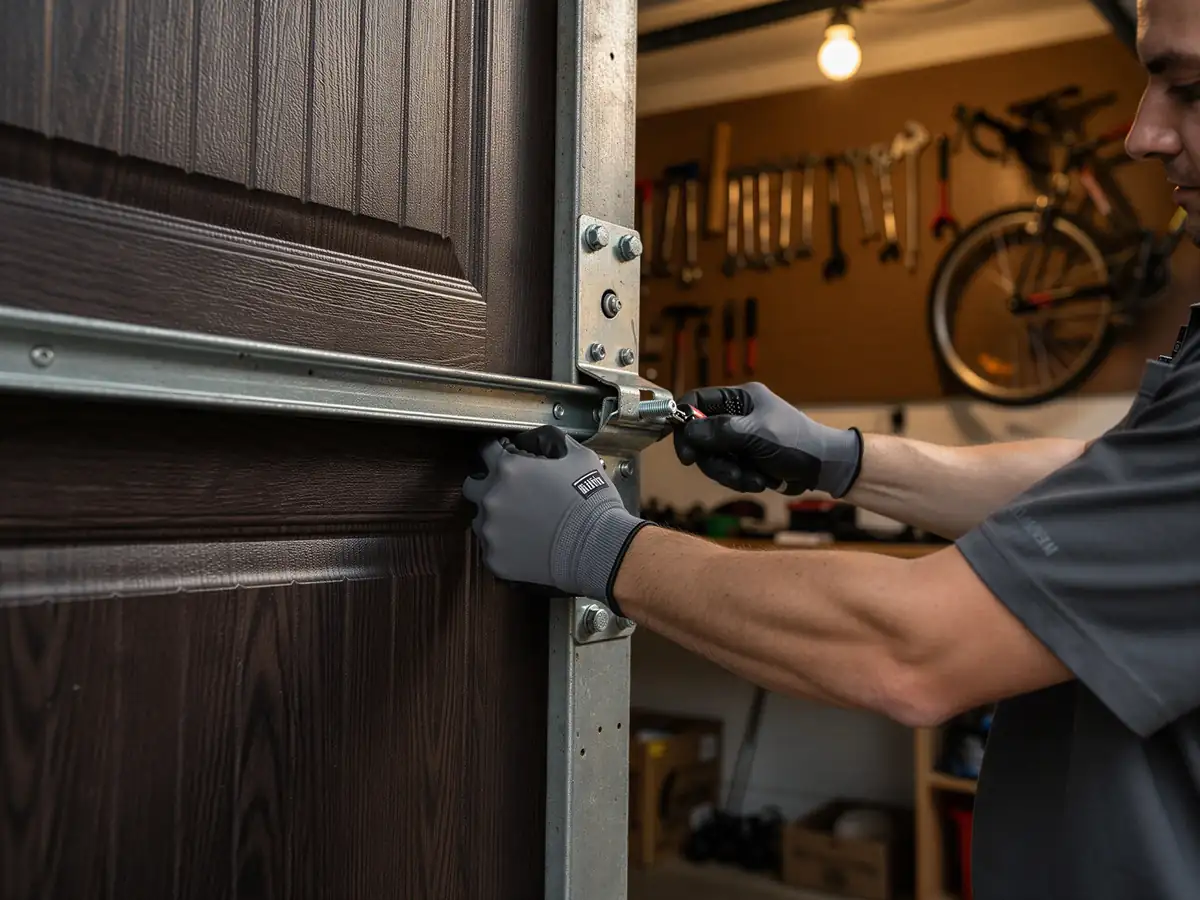
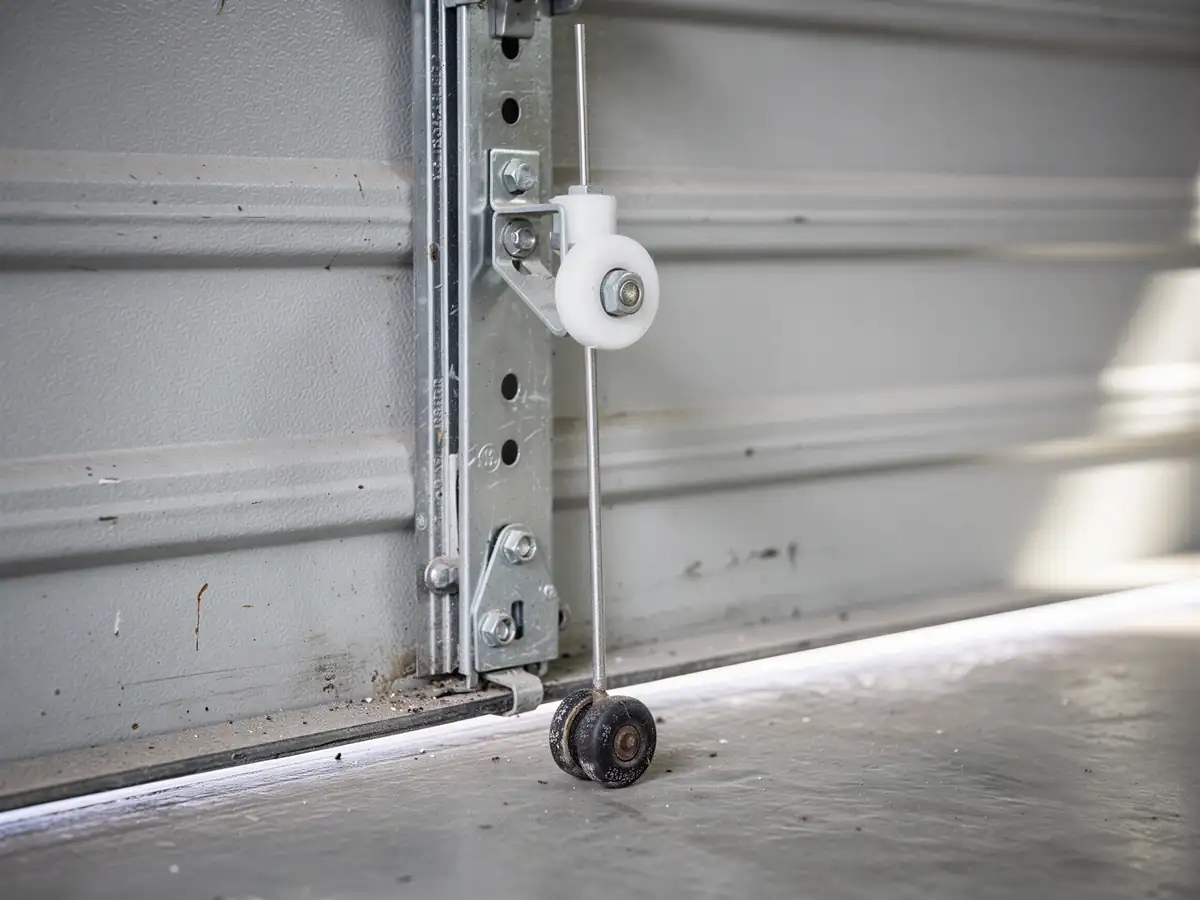
It's rollers that have gone oval. A steel ball-bearing roller rides a stem that's maybe 7/16 of an inch thick, and after a couple decades of travel up and down a track that was never quite perfectly plumb to begin with, the stem wears a flat spot. The door starts to hop instead of glide, especially at the same point in the travel every time, because that's where the worn spot meets the rail.
This isn't a random failure
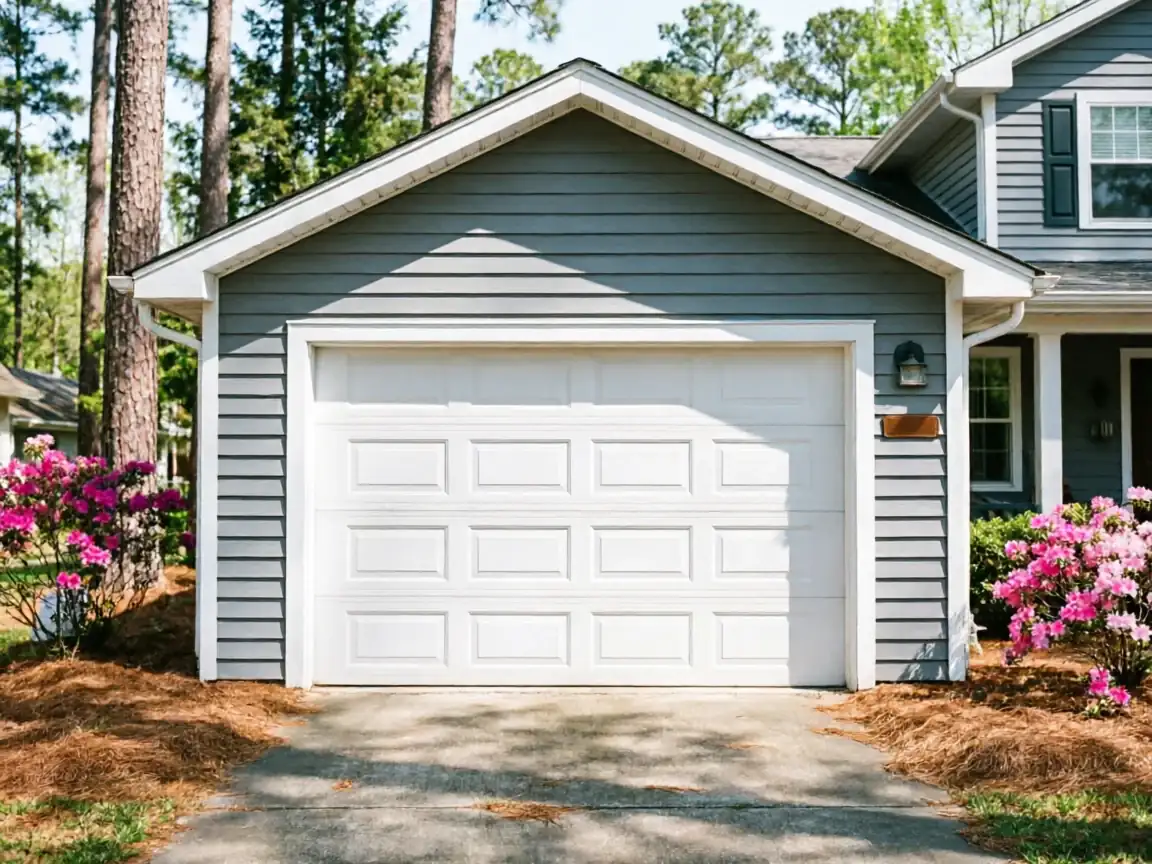
Portsmouth's housing stock centers on 1966, which puts most of the stock squarely in the 1960s-70s band - built with narrower steel track and steel rollers, not the wider galvanized rail and nylon rollers you'd find on anything put up after the mid-80s. The old track geometry doesn't forgive a worn roller the way newer rail does. Once the stem goes, the roller doesn't just squeak - it starts eating into the track edge, which turns a $20 part into a track replacement if it sits too long. We see this pattern often enough in this part of the service area that it's not really a surprise call anymore, it's the expected one.
Booking a Visit
There's no Portsmouth branch - we run this job out of Norfolk, about 8 miles out. That means we're not the first truck on the street for an emergency the way a local shop might be, but it also means the crew that shows up has worked the same 1960s-70s track geometry on plenty of houses just like yours, since that's the dominant stock across this whole stretch of the service area.
A roller swap is a scheduled job, not usually a same-day emergency unless the door's stuck off the track entirely. Call ahead, tell us the door is grinding or hopping at one spot in the travel, and we'll bring rollers sized for the older stem diameter rather than assuming a stock modern part fits - it often doesn't on houses this age. For a look at what this costs on the Norfolk side of the work, the base roller replacement page has the breakdown. For what we cover in your stretch of the map, see the Portsmouth area page linked below.
What You Are Seeing
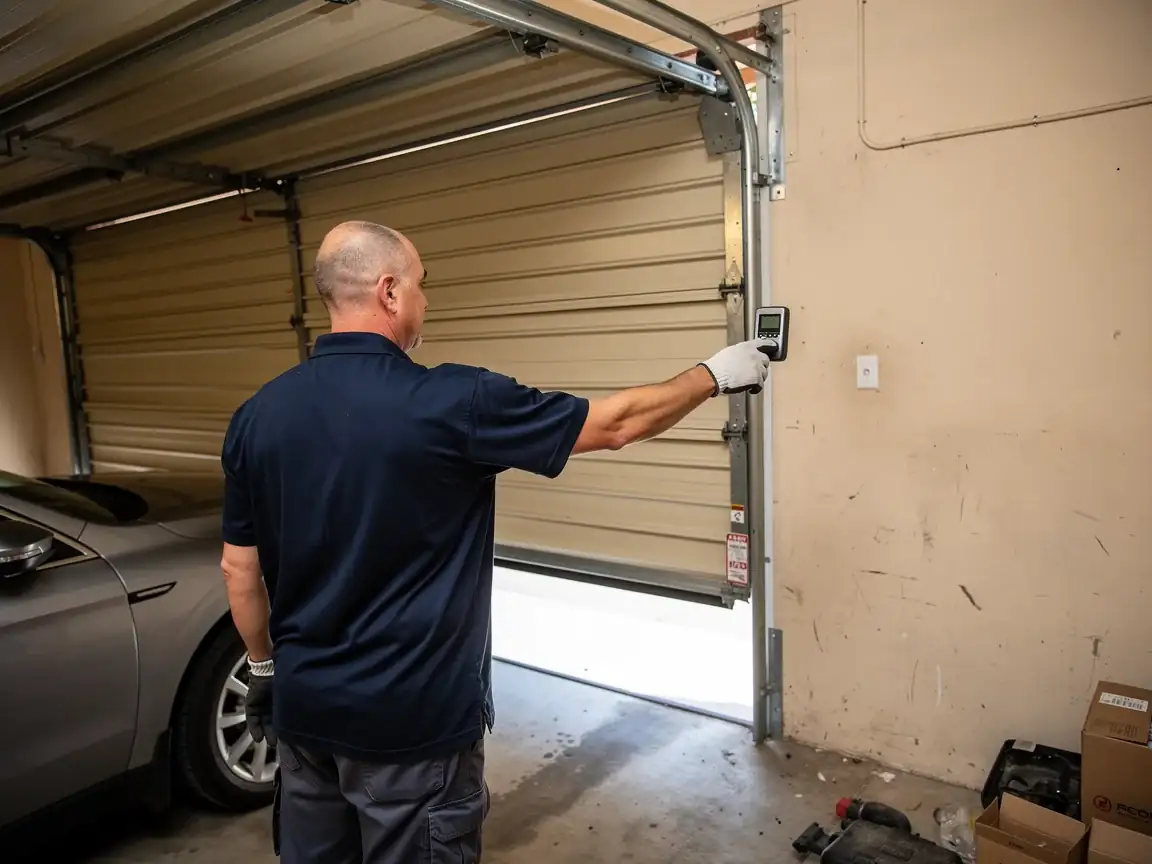
The telltale sign is a grinding or clunking sound that happens at the same point every time the door opens or closes - not random, not constant, just one spot. That's the worn flat on the roller stem meeting the rail. A second sign is the door catching slightly, almost stuttering, right before it clears the opening. Owners sometimes describe it as the door "skipping a step."
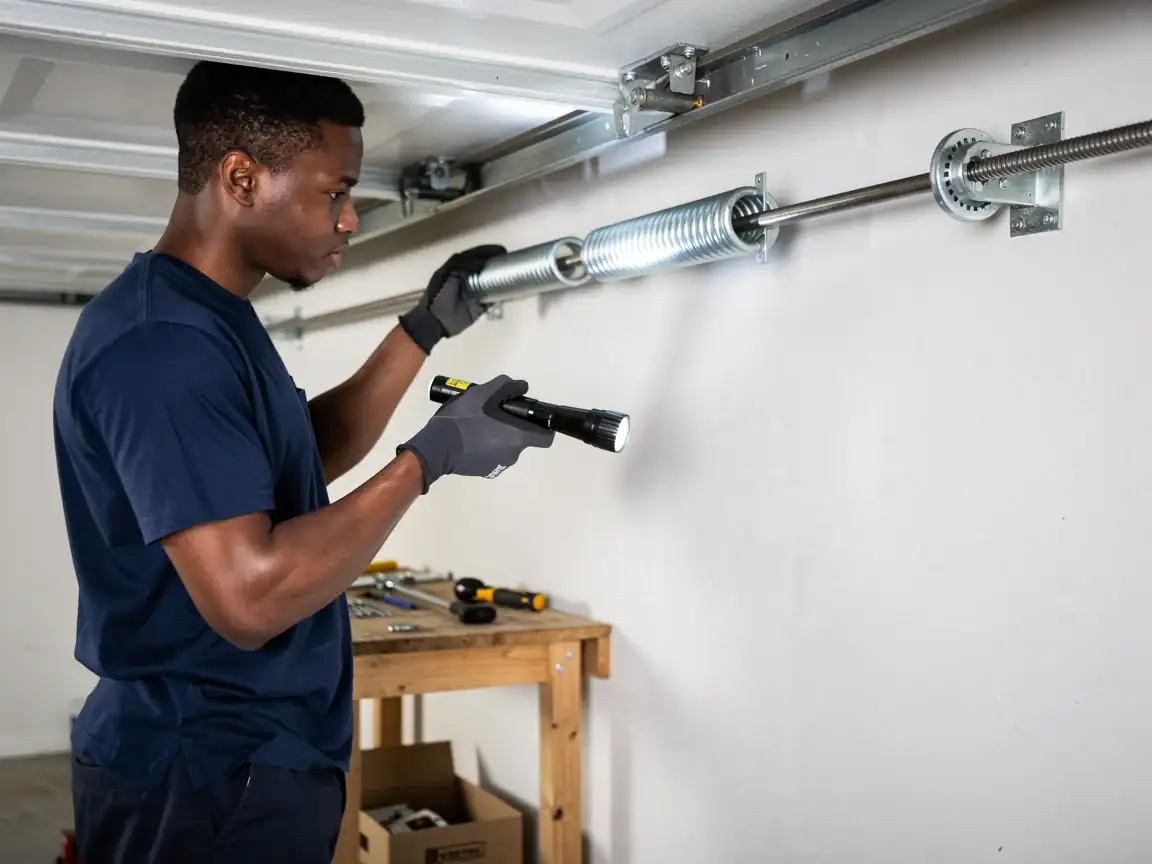
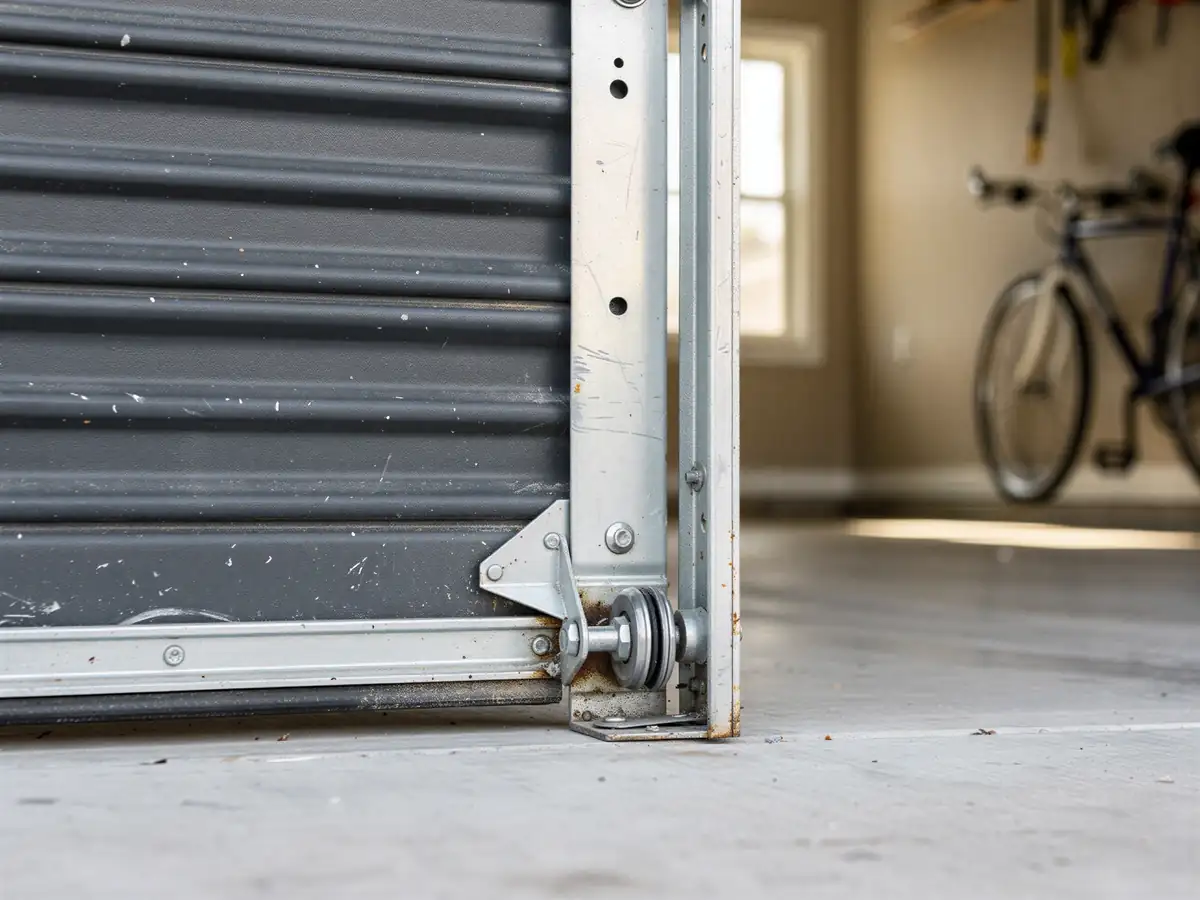
If you look at the rollers themselves - the wheels riding in the vertical track near the bottom panel - steel ones from this era often show rust bloom around the stem where water's gotten in over the years, even on a door that's otherwise in decent shape. Rust plus a worn stem is usually enough reason to replace the full set rather than just the one that's loudest, since the others aren't far behind it.
One limitation worth saying plainly: if the track itself is bent or the rail has been chewed up from a roller that failed months ago, a roller swap alone won't fix the noise. At that point you're looking at track replacement too, and we'll tell you that up front rather than sell a partial fix.
Why It Happens Here
The region sits in a cold-moderate climate band
Which means these rollers go through real freeze-thaw cycling every winter rather than staying in one temperature range year-round. Steel handles that worse than nylon - it doesn't flex, so the stem wears instead of giving. Add in the coastal humidity that reaches this stretch of the map - sits about a mile northeast two miles north, both close enough that the same damp air works on Portsmouth's hardware - and you get steel rollers that rust at the stem even on doors that otherwise look fine.
There's also an income pattern worth naming honestly
Portsmouth's median household income runs around $58,972, well under the broader service area's $89,945. That gap shows up in how these jobs get handled - more patch repairs, fewer full door replacements, which means more of the original 1966-era hardware stays in service longer than it would somewhere with a faster replacement cycle. That's not a knock on the town, it's just why roller replacement, specifically, comes up here more than full door swaps do.